
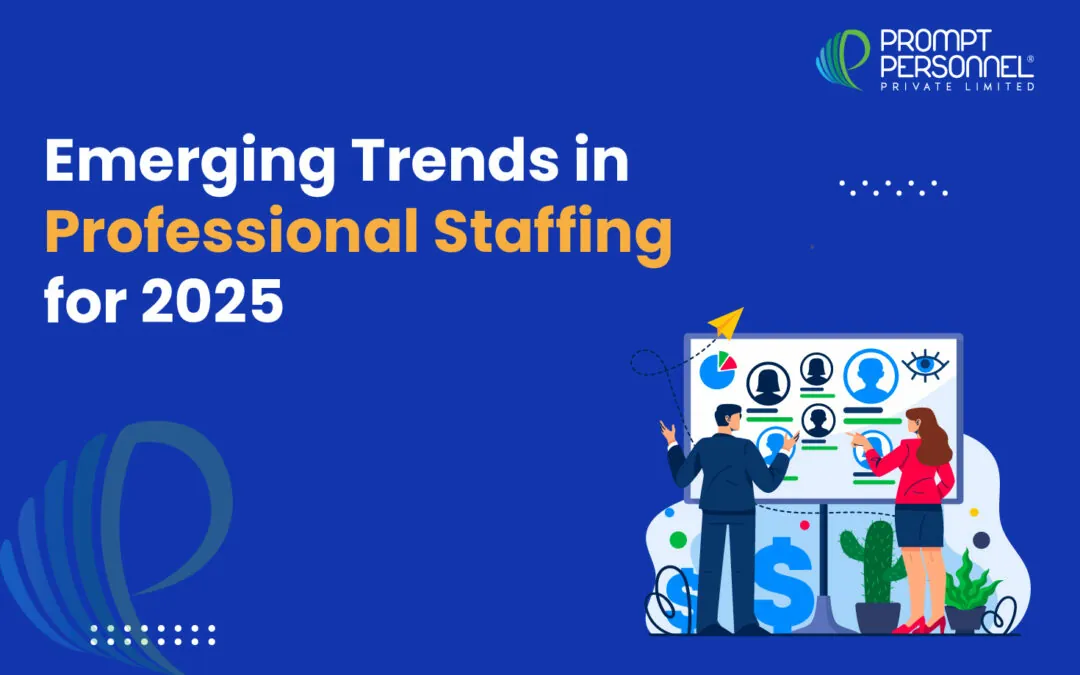
What if artificial intelligence could revolutionize your employment process, help you find great people every time, and streamline operations? Though it might seem like a thing of the future, artificial intelligence is already changing the scene for professional staffing companies and shaping major staffing industry trends.
Even though AI was initially used in employment practices in the early 2010s, its uptake has significantly increased in the last several years. An incredible 55% of staffing companies worldwide had begun experimenting with AI technology by 2023, demonstrating a substantial shift in trends in the staffing industry toward digital transformation.
The AI industry’s technology advancements have enhanced hiring quality, increased productivity, and eliminated many tedious activities. Professional staffing firms now use Gen AI and other techniques to find top talent, predict hiring needs, and even create future-ready talent pipelines. Referrals and the manual labor of searching for prospects across multiple platforms have decreased. These once time-consuming processes have been simplified significantly, shaping new staffing trends and transforming operational efficiency.
In this ever-evolving landscape, AI has become essential. What was once considered a novelty is now a core part of modern staffing practices. And the best part? With emerging innovations and it staffing trends 2025 on the rise, this transformation is just beginning.
How AI and Automation Are Shaping Professional Staffing
What is changing the way professional staffing companies operate today? Automation powered by artificial intelligence. Tasks with extremely low TAT—such as screening resumes, sourcing candidates, and scheduling interviews—are now handled seamlessly by AI. Manual processes that once slowed down recruiters are fading, making room for more strategic, value-driven work and influencing major trends of staffing shifts.
In addition to administrative tasks, AI is helping predict hiring needs and understand talent preferences. Professional staffing firms now proactively build talent pipelines using this data, a hallmark of modern staffing industry trends. AI is reshaping how firms function and thrive.
1. AI-Assisted Resume Evaluation
Applicant Tracking Systems (ATS) powered by AI now review resumes, score them, and match applicants more effectively reducing manual effort while improving accuracy.
2. Virtual Hiring Assistants and Chatbots
AI-based chatbots on job platforms engage with candidates, answer queries, schedule interviews, and conduct basic screenings. This forms a crucial part of trends in the staffing industry aimed at enhancing candidate experiences.
3. Workforce Planning Using Predictive Analytics
Predictive analytics help staffing firms anticipate hiring needs, identify talent gaps, and make data-driven recruitment decisions. Read make data-driven decisions on recruitment efforts.
4. Automated Onboarding and Training
Automation has transformed onboarding—digitizing documentation, training, and compliance while ensuring smoother transitions for new hires.
The Impact of Generative AI on Professional Staffing
Generative AI (Gen AI) has introduced new innovations in recruitment. It automates complex tasks, produces new content, and enhances decision-making. V2Soft was among the first to integrate generative AI to solve industry challenges and enhance digital transformation—setting benchmarks for future staffing trends.
Challenges
Balancing Automation with Human Interaction
Maintaining meaningful human engagement alongside automation is vital.
Following Legal Guidelines
AI systems must comply with evolving labor regulations to avoid legal issues.
Upskilling Recruiters
With AI taking over repetitive tasks, recruiters must strengthen soft skills like emotional intelligence and relationship management.
Social Media’s Increasing Impact on Hiring
Social media-driven recruitment is one of the fastest-growing trends of staffing today. Gen AI uses social data to personalize engagement, automate sourcing, and refine talent matching. Hyper-personalization through AI-crafted messages enhances candidate experience.
AI can also analyze social media patterns to help staffing firms forecast market changes—making it a strong contributor to staffing industry trends in 2025.
The Rise of Hybrid Workforce Staffing
Remote and hybrid work models have expanded talent pools globally and created new is staffing trends 2025. Staffing agencies are adopting hybrid models to improve flexibility, productivity, and employee satisfaction.
1. Expansion of Global Talent Pool
Remote work opens access to skilled professionals worldwide.
2. Demand for Remote Work Flexibility
Flexibility remains a top priority for job seekers.
3. Rise of Digital Collaboration Tools
Tools like Zoom, Slack, and Teams support remote collaboration.
4. Cybersecurity and Compliance Challenges
Remote hiring demands strict data security and legal compliance.
In-Demand Skills for 2025 and Beyond
As AI adoption accelerates, professional staffing firms are prioritizing talent skilled in data analytics, AI tools, and emerging technologies—core components of it staffing trends 2025.
1. Digital and Technology Skills
High demand for skills in AI, Python, R, cloud computing, cybersecurity, and NLP.
2. Soft Skills for the Future Workforce
Resilience, adaptability, emotional intelligence, communication, and creative problem-solving.
3. Green and Sustainability Skills
Growing emphasis on ESG compliance, renewable energy expertise, and sustainable business practices.
Conclusion
As the staffing landscape rapidly transforms, AI, automation, hybrid work models, and new skill demands are redefining how organizations hire and grow. The latest IT staffing trends for 2025 clearly show a shift toward smarter, data-driven, and highly flexible workforce strategies. Professional staffing companies like Prompt Personnel are adapting to these changes by integrating advanced technologies and modern hiring practices to better support businesses.
From AI-powered recruitment to the rise of remote talent and ESG-focused roles, the staffing industry trends highlight the need for agility, innovation, and strong human-tech collaboration. Companies that align with these evolving trends in the staffing industry will be best positioned to build resilient, future-ready teams and stay competitive in a dynamic market.