

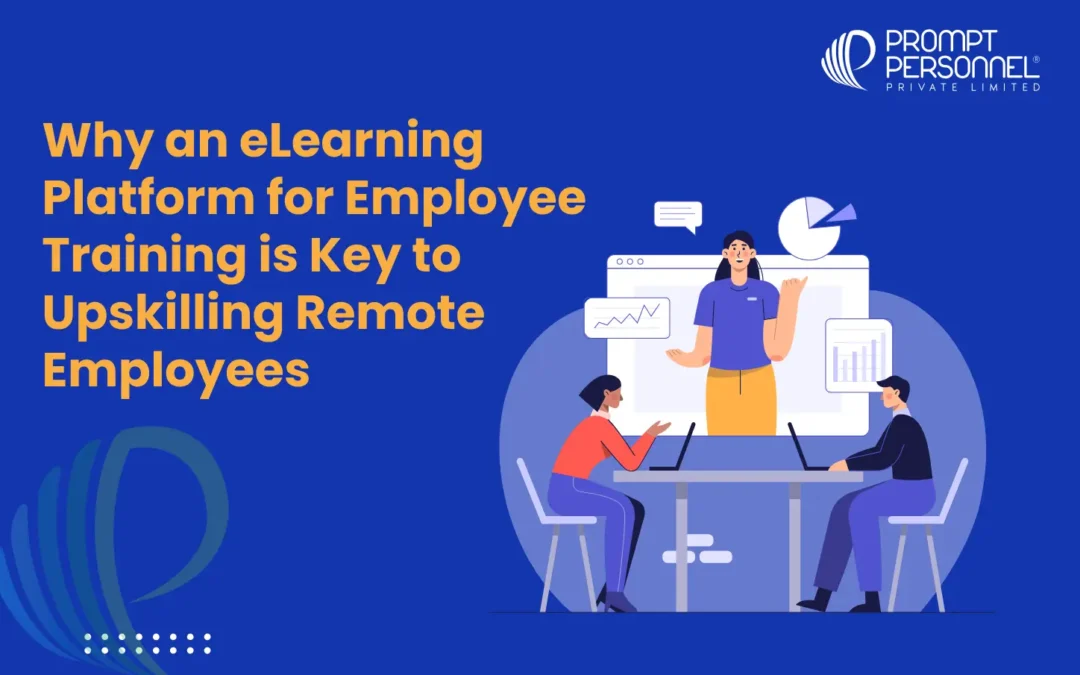
Remote and hybrid work have not become the new buzzwords but the actual future for most businesses worldwide. Organizations have seen productivity increases, better business outcomes, and happier workers, which has helped keep demand high for remote work. A 2021 Flex Jobs survey showed that 65% of employees wanted to remain fully remote post-pandemic. Companies must upskill their workforce to survive in this new world. Probably the most impactful of these is the employee upskilling platform that supports eLearning and online employee training programs, specifically for remote workers. Online training is essential to ensure business success among remote teams.
Accessibility and Consistency Everywhere
The biggest challenge of remote training is that the learning material must have access and consistency across all locations. In traditional training, in-person sessions or physical manuals are inaccessible to people working in different locations, creating gaps in learning and inconsistent knowledge transfer.
The issue is resolved through an e-learning for employees platform with centralized access to training content. With LMS tools, any employee can log in from anywhere and be directed to custom-built training material at once, ensuring that all employees receive similar high-quality instruction.
Additionally, eLearning removes the variation in physical classes where trainers may use different delivery modes or irrelevant content. A strong online employee training solution ensures that every distributed worker is aligned with organizational objectives and equipped with accurate and consistent data.
Cost-Effective Learning Solutions
Traditional training models are expensive in terms of travel, venue rentals, printed materials, and instructor fees. Costs can quickly spin out of control for organizations with distributed teams.
An eLearning platform reduces training expenses substantially. It allows for long-term training without the need for travel or physical infrastructure. Although the initial investment may be significant, long-term savings are enormous. Businesses save operational costs while still delivering quality training.
Additionally, web-based training enables workers to revisit modules multiple times without added cost, ensuring deeper learning and better ROI on L&D initiatives.
Flexibility for Diverse Workforce
Remote employees have flexibility in their work schedules, and training must reflect that. Telecommuting workers often have varied shifts and responsibilities that do not allow rigid training schedules.
An online employee training program facilitates self-paced learning, so employees can take courses whenever it suits them—during lunch breaks, evenings, or weekends—without disrupting their workflow.
This flexibility empowers remote workers and helps them stay in control of their learning journey.
Better Collaboration with Virtual Tools
Remote work may sometimes create a feeling of isolation since employees miss out on the collaborative environment of a physical office. However, modern eLearning platforms include virtual collaboration features that enhance teamwork.
These remote workforce training tools foster collaboration and keep remote teams connected, engaged, and motivated.
Insights for Better Decision-Making through Data
One of the common problems with remote training is the lack of visibility into learner progress. Managers often struggle to determine whether employees participate and benefit from the training programs.
That’s where remote employee training software becomes invaluable. With built-in analytics and reporting tools, it provides real-time insights into employee performance. Managers can track course completion rates, quiz scores, and engagement levels.
These data-driven insights help identify skill gaps and guide future training initiatives, ensuring that all employees stay on track with learning objectives. Know more about the benefits of outsourcing HR Services for remote team management.
Engagement through Gamification
Maintaining employee interest in training becomes difficult when learning happens in remote environments. An eLearning platform overcomes this issue by incorporating gamification—using game-like elements to make training interactive and engaging.
Badges, points, and leaderboards make training enjoyable and competitive. Employees become more willing to complete courses because it creates a sense of accomplishment and friendly rivalry.
Gamification increases engagement and retention, ensuring employees apply what they learn in their roles.
Employee Well-being
Mental health and well-being are essential for a productive workforce, especially in remote settings. Employees may feel overwhelmed or isolated, so organizations must support their emotional needs.
This may include training focused on mental health awareness, stress management, and work-life balance. Discussion boards and social learning features allow employees to share experiences and support one another, building a stronger sense of community.
By focusing on well-being through eLearning, organizations boost employee satisfaction and retention.
Readiness for Future Workforce Needs
As technology evolves, workplace skills must evolve as well. Organizations that invest in upskilling through employee upskilling platforms and other digital training systems prepare themselves for future challenges.
An eLearning platform makes it easy to introduce new modules—whether for updating software skills or improving communication and leadership abilities. Businesses can future-proof their workforce and maintain a competitive edge.
Conclusion
In this remote-first world, investing in an eLearning platform for employee training is not optional—it is mandatory. Online training enhances accessibility, reduces costs, strengthens collaboration, and supports the well-being of remote employees. With robust online employee training solutions, companies can empower their workforce and build a future-ready team.
Empower your employees and lift your organization with Prompt Personnel. Contact Us for Learning & Development solutions using India’s leading eLearning platform. It allows your workforce to benefit from self-paced training and professional development programs to fuel individual and organizational growth. Don’t wait—unlock the full potential of your remote teams today.