


There is a possibility that India’s labor laws may witness one of the most important moments in their history. The Supreme Court of India, in a pioneering judgment, observed that “parenthood is not a solitary function,” suggesting that the Central Government should consider establishing a statutory framework to recognize paternity leave in India as a social security benefit.
This observation was made in the process of overturning a section of provision in the Code of Social Security Act limiting maternity leave benefits to adopted children under three months of age, considering it both discriminatory and unreasonable. Even though the verdict pertained to the adoption of maternity benefits exclusively, its consequences transcend the matter at hand, bringing to the surface issues relating to gender equality and parental leave policy in India.
This court decision may signal the start of a more equal framework for shared parenting at a time when maternity leave is well-established but paternity leave is still disjointed and discretionary.
Understanding the Supreme Court’s Position
The Supreme Court’s judgment is noteworthy for both in terms of what was protected and what was overturned. The Court highlighted that care giving should not be restricted biologically or confined to any particular definition by overturning the irrational prohibition on adoptive mothers.
It must be noted that although it is important that the mother plays a critical role in nurturing her child in the formative years, it will certainly be unjustified and outmoded if the emotional ties that the father develops with his child is overlooked.
This observation is critical from a labor law perspective as well. The absence of a structured paternity leave policy in India has long perpetuated gender-stereotyped parenting roles, where caregiving is seen primarily as a woman’s responsibility.
The Current State of Paternity Leave in India
India currently lacks a comprehensive legislative framework governing paternity leave in the private sector, despite changing workplace standards.
What exists today:
- Maternity Benefit Act, 1961: Provides 26 weeks of paid leave for eligible women employees
- Government sector: Male employees can avail themselves of limited paternity leave (usually up to 15 days)
- Private sector: It varies widely depending on the forward-looking nature of the companies, who give male employees paternity leave ranging from a few days to a few weeks.
The huge difference clearly indicates one of the biggest shortcomings of the Indian social security benefit. Maternity leave is legally entitled to women employees, whereas paternity leave is viewed as an optional benefit. Hence, it shows inequality between government and private sectors and between various companies within the private sector.
Why Paternity Leave is No Longer Optional
The recommendation for formalizing paternity leave in India is no longer merely aspirational, it is essential for achieving broader socio-economic and workplace goals.
- Advancing Gender Equality in the Workplace
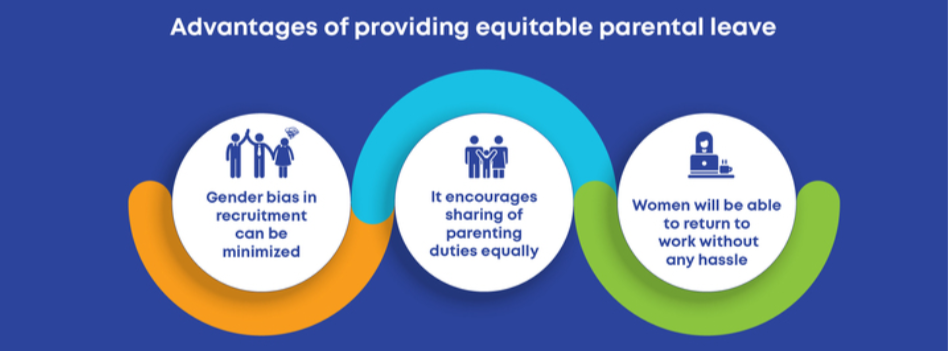
There is one more compelling reason why paternity leave should be introduced is because it can contribute to gender equality at the workplace. A woman’s professional development is affected because of the stress of raising children.
- Supporting Child Development
Studies have revealed that parental engagement from an early age helps positively influence a child’s emotional and mental development. Paternity leave makes it easier for early bonding that plays an important role in the first few months.
- Enhancing Maternal Health and Wellbeing
After giving birth, the psychological and emotional condition of the mother is equally important as her physical condition. In this situation, an involved father can play a huge role in reducing the worries, fears, and fatigue of new mothers, thereby creating a positive family environment.
- Improving Employee Wellbeing and Retention
Indian organizations that have implemented advanced employee wellness policies, which include paternity leaves, have found their employees more satisfied, loyal, and dedicated to the organization.
As compliance experts at Prompt Personnel, we recognize such policies are not merely “nice-to-have” but are increasingly becoming strategic business imperatives.
As compliance experts at Prompt Personnel, we recognize such policies are not merely “nice-to-have” but are increasingly becoming strategic business imperatives.
Global Benchmarks: Where India Stands
In comparison to international standards, India’s approach towards parental leave policy remains underdeveloped.
- In Nordic countries like Sweden and Norway, they offer extensive shared parental leave, with specific quotas for fathers.
- In the United Kingdom and Canada region, they provide structured paternity and shared parental leave options.
The majority of wealthy nations view paternity leave as a right rather than a perk. The Supreme Court’s recent remarks suggest that labor law reforms in India may be about to take a significant turn.
Implications for Employers: Acting Ahead of Legislation
Forward-looking employers should view this development as an opportunity to lead rather than wait for regulatory updates.
Why proactive policy design matters:
- Anticipates future compliance requirements
- Aligns with Diversity, Equity and Inclusion (DEI) goals
- Enhances talent attraction and retention
- Improves employer branding
Important aspects of a good paternity leave policy:
- Paid paternity leave (ideally 2–8 weeks)
- Flexible work arrangements post-leave
- Gender-neutral or shared parental leave frameworks
- Clear eligibility and application processes
Implementing these features would not only help the employees but would also put the organization ahead of the competition as an innovative employer.
Policy Outlook: What Lies Ahead
The Supreme Court’s request to the Central Government is more than just an observation, it is a clear indication of policy direction. There seems to be an increasing probability that paternity leave will eventually be included in the social security system in India, either through amendments to existing labour codes or through new legislation.
Above all, it will mark a change in the perception of parenthood, which should no longer be considered as a personal responsibility, but as a societal one.
Conclusion
Paternity leave in India is of great significance as it is important for future work trends, families, and gender equality. The recommendation of the Supreme Court is significant because taking care of the child must always be considered as a collaborative effort within the families as well as the law overseeing them.
This is an opportunity for policy-makers to plug a loophole that has existed in Indian labour law for a long time. Last but not least, this is a step towards breaking down gender stereotypes in society. The implementation of paternity leave in the corporate sector is one of the numerous actions that India must do to advance and alter gender stereotypes in the future. We may assist you if you need assistance reviewing your HR policy! Reach out to us at [email protected]


