by Prompt Personnel | Dec 27, 2024 | Staffing Industries
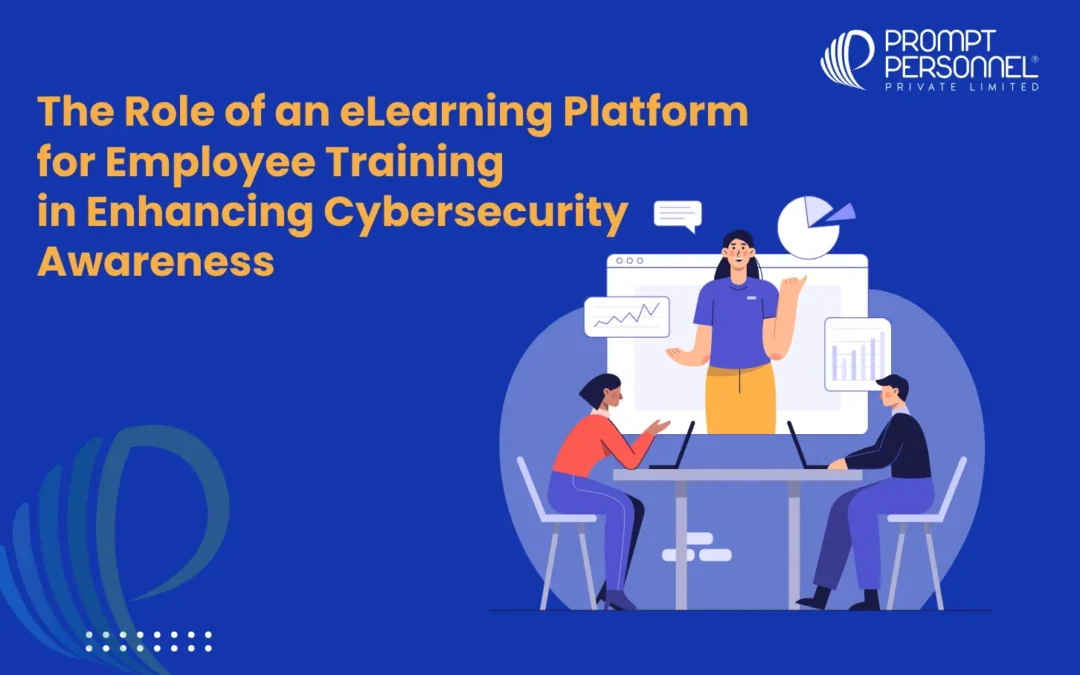
In today’s digital world, businesses experience a growing number of cybersecurity threats, therefore, making employee training crucial in defending sensitive data. With technology changing and the work environment evolving, ensuring that employees understand cybersecurity is more important now than ever. A fast and modern way to meet this requirement is through online learning platforms, which are becoming a standard tool of employee training, especially cybersecurity awareness.
The rise of employee cyber eLearning is changing how companies approach training, making options flexible, cost-effective, and incredibly engaging. For businesses specifically, but also in other areas of improvement, eLearning can prove to be effective in boosting knowledge retention while increasing productivity and further developing the overall safety of the digital infrastructure of an organization.
Why eLearning for Cybersecurity Awareness Training Is Important
Flexibility and Convenience
One of the key advantages of eLearning is its flexibility. In today’s fast-paced work environment, employees have packed schedules, making traditional training methods such as in-person sessions and seminars difficult to implement. Staff eLearning platforms offer employees the ability to learn at their own pace and convenience, which is especially important for busy professionals. Cybersecurity training can be broken into bite-sized modules, allowing employees to learn and apply knowledge in manageable segments.
They allow time flexibility, which helps learners catch the module at any convenient hour suitable to an employee’s routine, causing no disruption in the individual’s daily activities. A small organization in India or those in cities like Mumbai experience time constraints, making managing busy work schedules with this solution possible.
Customizable Learning Experience
Contrasting to the traditional training, eLearning programs are highly customizable based on business-specific needs and individual styles of learning. Organizations may tailor courses to suit specific business risks and needs for organizations, hence employee training may become relevant and applicable to work. For instance, a company based in India could create a course meant for HR outsourcing companies located in Mumbai and is based on cybersecurity issues of the functions of handling human resources, data handling, and privacy law.
Furthermore, eLearning promotes self-paced engagement with content, which tends to make the learning process more interactive. This means that individuals learn better and retain their learning better, ensuring that no matter what the learning style or position within the company, employees receive the cybersecurity training they need to do the job.
Gamification for Engagement
The process of training in cybersecurity is usually seen as being dull and hard to remember. However, cybersecurity education platforms for employees can easily overcome this problem by including interactive features like gamification. Gamification has been known to improve the engagement of employees as well as enhance learning, especially in complex topics such as cybersecurity. According to a report from McAfee, gamification has been identified as a useful technique for improving cybersecurity awareness.
In the case of cybersecurity training, the use of games to help employees visualize the effects of breached security allows them to practically test their knowledge in real time. This hands-on approach is a better enabler for retaining and subsequently applying the knowledge. Cyber threats often target businesses around Mumbai; thus, eLearning courses that are gamified will help employees of such organizations understand the potential risks and respond proactively, fostering a culture for cybersecurity awareness.
Cost-Effective Training
Traditional methods of employee training can be very costly because they require venue space, trainers, travel expenses, and materials. In contrast, eLearning is more budget friendly. According to IDC, the business can save 50% to 70% by using eLearning compared to traditional training methods. These savings can then be reinvested into the improvement of the organization’s cybersecurity infrastructure.
To eLearning, the HR outsourcing company could cater for all their large numbers of employees dispersed in several locations at no extra cost. This will be an appropriate way to empower all their staff members on cybersecurity skills. For example, in Mumbai, it will come in handy to train its employees scattered across different departments and locations without having to incur high costs.
Detailed Feedback and Progress Tracking
Another major benefit of eLearning systems is the detailed feedback and tracking provided. Such systems provide effective reporting tools that help in tracking employee progress, engagement level, and participation. Organizations can use this information to evaluate weaknesses and determine staff members who need more education.
This level of insight is invaluable for HR services in Mumbai or HR outsourcing companies in India. Know more about outsourcing HR services. The effectiveness of cybersecurity training can be tracked by HR consultants to ensure that employees are receiving the necessary support and resources to understand their role in maintaining security.
Conclusion
Including eLearning in employee training is a strategic move, which increases efficiency, saves costs, and promotes flexibility in learning. The nature of cyber threats continues to evolve, making businesses in Mumbai, India, and across the world look for a way to strengthen their defenses through proper cybersecurity training.
Indeed, HR outsourcing companies such as Prompt Personnel play an essential role in the roll out of these training programs because they help organizations determine what platforms best fit the company’s needs. And if an organization utilizes the benefits that eLearning offers, business can be sure employees would be well-equipped and more than prepared to understand the cyber threats and deal with them appropriately, for it creates a safer workplace and organization.
As a HR consulting firm in India, we present our Learning & Development platform with over 130 courses tailored for the business needs of today, which include leadership skills and technical skills. Ideally designed for HR Managers, L&D Heads, and other senior executives, our flexible, self-paced learning solutions enable professionals to upskill and advance their careers.
It is important to know that investing in cybersecurity awareness through eLearning is not a trend but rather an essential part of modern business operations. For more information on the best HR outsourcing companies, contact us today.

by Prompt Personnel | Dec 18, 2024 | Contract Staffing
Today, statutory compliance, in particular in business setup with contract staffing, is very important because not following the law can give them severe backlash in the form of punishments, bad reputation, and operational inefficiency. For all those businesses depending on contract staff, proper observance of statutory labor law will be most important in avoiding such kinds of risk so that the firms can perform in a sound manner.
Labor Laws and Statutory Requirements
The first step towards compliance in contract staffing is to understand labor laws as applicable to your organization. Labor laws vary from one region to another and also with industry, hence, businesses have to be well informed about the statutory requirements in place for minimum wages, overtime pay, social security contributions, among other employee benefits. For example, in India, it is important to be compliant with the Contract Labor (Regulation and Abolition) Act, which governs the employment of contract workers. In India, contract staffing companies often provide insights and support to ensure compliance with these regulations.
Work with Experienced Contract Staffing Agencies
A reliable contract staffing agency with a deep knowledge of statutory regulations can reduce compliance risks significantly. These agencies are equipped to handle a variety of legal and administrative tasks, such as ensuring that workers are compensated according to the law and are enrolled in mandatory insurance programs. For businesses operating in Mumbai or other urban centers, contract staffing companies in Mumbai are well-versed with local labor laws and can help streamline compliance.
Maintain Right Documentation and Records
Recording in contract staffing is essential for the purpose of statutory compliance. The recording should be proper and to the point regarding the contracts entered, information of employees, payments and all other necessary records that might be needed in future audit or legal scrutiny. Many companies specializing in contract staffing maintains such records and all necessary documents in order to keep everything up to date.
Standardized Contracts and Agreements
To reduce risks, companies should standardize their contracts for contract staff. A well-drafted agreement should include critical details such as job roles, payment terms, benefits, working hours, and other expectations. It should also include a clause addressing compliance with labor laws. By using standardized contracts, businesses can ensure that they are consistently adhering to statutory requirements across all staffing contracts.
Regular Audits and Compliance Checks
The audit and compliance checks are conducted frequently to ensure that the company is meeting its statutory obligations. Routine reviews of the contracts, payment records, and benefits extended to the employees can bring to the fore any differences or non-compliance lapses. Many contract staffing companies provide audit services; these will help businesses spot potential problems early and make appropriate corrections before they become serious issues.
Adopt a Payment System that Meets Legal Standards
Accurate payment processing is an integral component of statutory compliance in contract staffing. Ensure timely and in accordance with the legal pay structure payment to all the contract workers. This involves minimum wage laws, payment of overtime as and when due, and statutory deductions such as Provident Fund, Employee State Insurance, and taxes. Automating the payment system or working with contract staffing companies that have established payment protocols can help avoid errors and ensure timely payments.
Communicate Clear Roles and Responsibilities
Clearly defined roles of both the employer and contract staff should be well portrayed in a business setting. These also set expectations concerning compliance with the workplace safety standards, attendance, conduct, and many more legal obligations. Both parties are therefore made to understand what is required of them while avoiding or reducing the possibility of any form of non-compliance through proper communication.
Offer Ongoing Training and Awareness
Training and awareness programs by contract staffing agencies on both statutory compliance to their staff as well as the employees under the contract is also essential for preventing miscommunication and keeping everybody updated on the statutory duties. Training programs that would cover the latest amendments of labor laws, among other changes, are provided in statutory compliance training programs undertaken by most contract staffing agencies.
Subcontractor Compliance Monitoring
In case you work with subcontractors and third-party contractors, their observance of the pertinent statutory regulations must also be assured. Among the elements in a compliance strategy is the consistent follow-up of subcontractors through verification of their compliance under the same legal standards required from you. For them, you should see contracts, payment practices, as well as the benefits being administered to their workers. This is an essential requirement of contract staffing for businesses because it helps to reduce risk and gain the trust of contract workers and clients.
Understanding the labor laws, partnering with companies that have experience in this field, proper documentation, and best practices such as regular audits and clear contracts can ensure smooth and legal staffing processes. Know more about the benefits of contract staffing.
With a reliable contract staffing agency, businesses can navigate complex regulations and be ahead of any compliance challenges, thus ensuring a stable, legally sound workforce. Since 1997, we at Prompt Personnel have been one of the most prominent contract staffing agencies, offering staffing solutions supported by deep HR outsourcing knowledge. With a strong network of consultants across India and the latest technology, we manage and support the staffing needs of our clients efficiently while ensuring compliance and smooth running. For details on contract staffing companies in Mumbai, please read more about us on our website today.
by Prompt Personnel | Dec 12, 2024 | Temporary Staffing
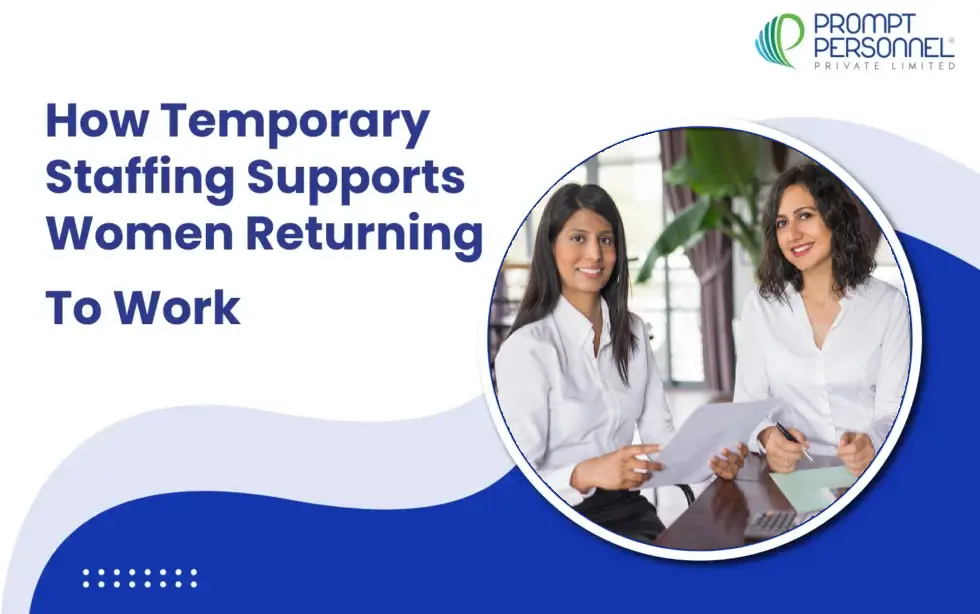
Rejoining work after a break can be exhilarating but confusing at the same time. Many reasons explain such a gap in careers-for raising children, family responsibilities, and personal health, for example. Most of the women who took time off express a great wish to resume their profession in a similar vein. 98.5% of them wish to get back to the labor force. However, the transition often comes with challenges such as skill gaps, self-doubt, and a job market that may have changed while they were away. Temporary staffing services and temporary staffing solutions can be key enablers for women looking to get back to work with confidence.
Flexible Work Opportunities
One of the biggest advantages of temporary staffing is its flexibility. A key point women looking to ease back into working can enjoy is the chance to begin with temporary or time-bound offers. This works wonderfully when having to match work with domestic or other personal commitments, and that’s why some of India’s temp staffing companies today are offering partial or projects-based work profiles, in order to assist in a comfortable re-entry of women employees into the rigors of a professional job arena.
Building Confidence and Experience
Temporary positions provide a strong platform for women to rebuild their confidence. Temporary jobs enable people to get practical experience and update their skills in the real world. Temporary staffing agencies frequently match candidates with roles that fit their previous experience or new skills they have learned during their career break. This experience empowers women and better equips them to pursue full-time opportunities later.
Skill Gap Bridge
The career gap is a perfect time for industries and technologies to evolve rapidly. This is a perfect opportunity to improve or reskill through temporary staffing services.
Many temp staffing companies provide roles that do not require long-term commitments, but they enable women to learn on the job, acquire new competencies, and stay abreast of the latest trends in the industry. Moreover, most temporary agency staffing firms offer training and certification programs that help complete the skill gap, which has become a must for women to remain viable in the job market.
Networking/Industry Exposure
Temporary jobs do expose employees to other different companies, teams, as well as industry professionals thereby giving women an opportunity to stretch their network and keep updating their contact list of any potential employer. For women restarting their careers, networking comes in handy.
As most of the women opt for temp staffing companies, women can make some high-quality professional contacts in the said companies.
Moreover, experience with various companies keeps us abreast of the existing demand and trends in the employment market, thus allowing better guidance for future job plans.
Work-Life Balance
For women returning to work, maintaining a work-life balance is usually the priority. Temporary roles can provide flexible working hours, remote work options, or part-time positions that make it easier to juggle both professional and personal responsibilities. Temporary staffing solutions cater to the growing need for flexible work arrangements, allowing women to gain employment without sacrificing their personal commitments. This work-life balance makes the return-to-work process smoother and more manageable.
Fast Track to Employment
The job search process is always long, especially after a career break. Most women feel that it takes a longer time to get a full-time job after the career gap. Temporary staffing agencies expedite this process as they connect women with opportunities for employment fast.
Such agencies usually have connections with the employers and can match the women with roles that will suit their skills and availability. This means women can begin earning money sooner and begin generating momentum toward long-term goals in their careers.
A Roadway to Permanent Employment
Women typically return to work with a long-term goal of acquiring a permanent position. The pathway to permanent employment often involves temporary positions. Employers often treat temporary staffing as a trial period, where the employee and employer can both evaluate the fit for a long-term role. Women who perform well in these positions are often offered permanent jobs, especially if they exhibit strong skills and dedication to the role.
Temporary staffing is not only helping women get back on their career tracks but also opens the door to new permanent job opportunities. Know more about the difference between permanent & temporary staffing.
Supportive Environment
Temporary staffing agencies understand that challenges will face women when returning to work. Such agencies usually are supportive in a manner different from the traditional hiring processes. Most agencies specialize in helping individuals re-enter the workforce and guide them to gain proper training and resources necessary for a smooth transition. The women can leverage the expertise of the temporary staffing companies so that they are matched to roles that best fit the personal and professional goals so that they can feel comfortable throughout their journey. Temporary staffing solutions for returning women to the workforce after career breaks offer numerous benefits making the transition smoother and manageable.
From flexible work arrangements to skill development and networking opportunities, temporary roles empower women with the tools to rebuild their careers with confidence.
Conclusion
Temporary staffing agencies that recognize the unique needs of women re-entering the workforce are playing a crucial role in empowering women to achieve their professional goals while maintaining balance in their personal lives. For women looking to re-enter the workforce, temporary staffing serves to getting back into the game. Since 1997, Prompt Personnel has been one of the most prominent temporary staffing agencies in the country. We provide industry expertise and a solid understanding of HR outsourcing in meeting clients’ staffing needs. With a vast network of consultants across India and advanced technological support, we manage temp staffing requirements efficiently and ensure seamless solutions for our clients. Contact us today for more information.
by Prompt Personnel | Dec 9, 2024 | labour law advisory
One of the biggest changes in the global workforce over the past few years is remote work. It is very flexible and convenient, but at the same time, it introduces new challenges in the work environment, particularly maintaining a safe and respectful one. One of the issues that are majorly affected is sexual harassment, which is still a major issue among women, even in virtual workplaces.
According to a study, 88 out of 314 respondents reported experiencing sexual harassment while working from home. This is one area that needs effective policies in handling the issue at hand. This is where the POSH Act is playing an important role because it is extending its protection to the remote work environment.
POSH Act and Remote Work: A Legal Perspective
The POSH Act was originally implemented to protect women against sexual harassment at traditional workplaces. Now, the same law has been implemented for the protection of women working remotely.
The POSH Act now defines the term “workplace” in broad terms to cover virtual areas so that the women who are working from home also are protected under this law.
Sections 2 and 3 of the POSH Act provide for several different forms of sexual harassment. These provisions are very relevant for remote workers as they cover the misconduct, such as sexual remarks during video calls, inappropriate messages, and even online stalking.
The all-inclusive scope of the act ensures that even those acts which are made through email, social networking, or video conferencing come under the POSH Act. For example, sending obscene messages, using foul language, or accessing someone’s private life by any such means is deemed harassment and can be litigated.
Expanding the Definition of “Workplace”
Critical here would be the question of whether a home office could be considered as a “workplace” under the POSH Act. Law defines a workplace as anywhere an employee goes to do work, and that encompasses the home, too. Courts have consistently expanded this definition of “workplace” by employing the concept of “Notional Extension.” This means locations associated with work, like remote settings, are considered within the purview of the POSH Act.
This legal interpretation ensures that women working remotely are protected, and any harassment they experience while performing their professional duties from home is treated with the same seriousness as harassment that occurs in a physical office environment.
Mechanisms to Redress Harassment through POSH Act
Mechanisms to redress under the POSH Act become readily evident, especially in cases of harassment. Women working remotely are provided with online platforms under government initiatives such as the she-BOX, intended to make the complaint-making process more accessible. Here, women can report harassments directly to the authority concerned, ensuring timely actions.
The ICC can also offer a temporary relief measure, such as transferring the complainant to another team or granting leave, to ensure that the victim does not have to interact with the accused again. This would be particularly important in work-from-home settings where interactions are minimal.
Challenges in Implementing POSH in Remote Workplaces
The POSH Act has a protective framework; however, enforcement becomes challenging in remote workplaces. Due to a lack of immediate supervision in virtual environments, there might not be easy ways to detect or address harassment. Furthermore, blurred lines between work and personal life in a remote setting might expose employees, especially women, to more harassment. Know more about reducing risk of compliance in remote work.
For instance, after-hours calls or unsolicited video chat requests can lead to awkward situations for female employees.
In most cases, employees are not sure what constitutes harassment in a digital setting and may not report the incidents due to fear of retaliation or termination.
Solutions and Recommendations
To implement the POSH Act in remote workplaces, organizations need to take the following proactive steps:
Education and Awareness: Employees should be educated periodically about sexual harassment policies and what behavior is not acceptable in virtual settings. They should be made aware of their rights and the kinds of behavior that are unacceptable, such as video conferences or digital communication.
Well-defined rules for virtual engagement: Organizations must have well-defined rules for online engagement to ensure that the employees know the limits between professional and personal engagements. For instance, after hours, no messages should be sent or one-on-one video chats should not be initiated without prior consent.
Proper reporting mechanism: Companies should have readily available reporting mechanisms for telecommuting workers to report harassment. In the workplace, she-BOX can be integrated in place with proper checks in with the employees for identification of possible issues early before they blow out of proportion.
Supportive Work Environment: The employers should create a supportive work environment where the employees are not afraid to report harassment. Regular feedback sessions and open communication channels help identify concerns early and provide the employees with the reassurance that their complaints will be taken seriously.
HR Consultants and Outsourcing: Especially for those who specialize in the compliance of POSH, HR consultants can be very crucial in guiding organizations through the intricacies of remote work and sexual harassment prevention. HR outsourcing service providers can also help in the implementation of policies; training; and ongoing support to ensure a safe and healthy workplace.
Conclusion
Since remote work is going to be an integral part of the future workplace, it is vital that the POSH Act is applied effectively to ensure that women are protected against sexual harassment in virtual space. Educating employees on the guidelines for virtual behavior and providing accessible reporting mechanisms can ensure a safer and more inclusive remote work environment.
In all those cases, Prompt Personnel stands for POSH compliance. It further strengthens an organization’s commitment to creating a harassment-free workplace. So, with our efforts, businesses can uphold the principles of equality and safety for all employees, regardless of their physical work location. For more info, contact us today.
by Prompt Personnel | Nov 28, 2024 | Uncategorized
India’s minimum wage systems are complicated, reflecting the country’s pluralistic economic module and regulatory setup. Understanding wage structures is vital for business entities, especially international investors and HR consultants aiming to make necessary compliance and regulate labour costs. This 2025 guide details a comprehensive structure related to the minimum wages in India, including some details such as computation methods, governing regulations, and regional differences.
What is the Minimum Wage in India?
The minimum wage in India is generally established as a standard minimum level of pay offered by employers to their employees, which maintains an acceptable living standard. Many countries have one national minimum wage. India, however, has several wages primarily based on some factors, which include:
- Geographical Location: The minimum wage in the state and union territory differs within itself, which again falls under zones such as urban, semi-urban, and rural development.
- Skill Level: Labourers are categorized as unskilled, semi-skilled, skilled, and even highly skilled, and their skill levels vary with the higher skills they acquire.
- Industry and Occupation: Minimum wages are prevalent in different industries and kinds of jobs, varying according to specific occupational needs.
How Is the Minimum Wage Calculated?
India uses a holistic approach to calculate its minimum wages, considering inflation and regional cost of living. In totality, this involves:
- Variable Dearness Allowance: Biannually calculated, VDA measures the fluctuations in the Consumer Price Index, thus reflecting wage levels on inflationary trends.
- House Rent Allowance: HRA is applicable in some situations; HRA shows the rent on houses prevailing in each area. The wage structure is concrete for more than 2,000 unskilled labour job categories and 400 types of employment.
Regional Dispersion in Minimum Wages
State Wise Minimum Wages:
| State |
Un-Skilled |
Semi-Skilled |
Skilled |
Highly Skilled |
| Andhra Pradesh |
11,798 |
13,150 |
14,951 |
15,451 |
| Arunachal Pradesh |
6,000 |
6,300 |
6,900 |
7,200 |
| Assam |
10,097 |
14,671 |
20,905 |
25,060 |
| Bihar |
10,712 |
11,780 |
13,546 |
16,536 |
| Chhattisgarh |
10,948 |
11,598 |
12,378 |
13,158 |
| Goa |
14,014 |
15,600 |
16,900 |
17,030 |
| Gujarat |
12,662 |
12,922 |
12,922 |
13,234 |
| Haryana |
11,001 |
12,129 |
13,372 |
14,041 |
| Himachal Pradesh |
12,000 |
12,690 |
13,920 |
14,490 |
| Jharkhand |
12,672 |
13,295 |
17,518 |
19,278 |
| Karnataka |
15,106 |
16,265 |
17,539 |
18,941 |
| Kerala |
12,728 |
13,456 |
14,734 |
15,076 |
| Madhya Pradesh |
10,225 |
11,082 |
12,460 |
13,760 |
| Maharashtra |
13,271 |
14,106 |
14,882 |
18,807 |
| Manipur |
– |
6,750 |
7,440 |
8,190 |
| Meghalaya |
419 |
474 |
530 |
586 |
| Mizoram |
420 |
460 |
570 |
730 |
| Nagaland |
– |
5,280 |
6,330 |
7,050 |
| Odisha |
402 |
502 |
552 |
602 |
| Punjab |
10,996 |
11,776 |
12,673 |
13,705 |
| Rajasthan |
7,410 |
7,722 |
8,034 |
9,334 |
| Sikkim |
500 |
520 |
535 |
565 |
| Tamil Nadu |
13,730 |
15,638 |
18,490 |
20,987 |
| Telangana |
12,498 |
13,446 |
14,998 |
15,998 |
| Tripura |
7,779 |
8,533 |
9,554 |
12,883 |
| Uttar Pradesh |
10,701 |
11,772 |
13,186 |
– |
| Uttarakhand |
12,539 |
13,280 |
14,023 |
15,275 |
| West Bengal |
10,214 |
11,236 |
12,688 |
13,595 |
Union Territory Wise Minimum Wages:
| Union Territories |
Un-Skilled |
Semi-Skilled |
Skilled |
Highly Skilled |
| Andaman and Nicobar Islands |
16,666 |
18,772 |
21,970 |
24,128 |
| Chandigarh |
13,834 |
13,984 |
14,259 |
14,619 |
| Dadra and Nagar Haveli |
12,376 |
12,662 |
12,922 |
– |
| Daman and Diu |
11,466 |
11,752 |
12,012 |
– |
| Delhi |
18,066 |
19,929 |
21,917 |
23,836 |
| Jammu and Kashmir |
8,086 |
10,400 |
12,558 |
14,352 |
| Ladakh |
450 |
535 |
575 |
835 |
| Puducherry |
11,131 |
11,242 |
11,283 |
11,695 |