by Prompt Personnel | Apr 27, 2024 | Job
Many job seekers actively apply for their desired roles, yet often experience nothing but radio silence in response. Potential reasons for this silence may include adhering to a single strategy, presenting unclear job experiences on your resume, or neglecting to adapt to online resume filters.
Whether you’re aiming for long-term stability or the flexibility of contract work, finding the perfect job can feel exhausting or even discouraging. However, recognizing the challenges you face, we’ve crafted this guide to offer potent strategies that will simplify your job search and lead you to certain success.
Why Is It So Difficult to Find Your Ideal Job?
Before learning about the strategies lets revise possible shortcomings that stand as an obstacle between you and your dream job. The following culprits can sabotage your job search:
- Applying to jobs out of hype: You fall prey to the latest trend, neglecting roles that truly align with your skills and goals. This often results in attempting to fit into a role that may not be the right fit for you.
- Not being visible to employers: Employers can’t hire who they can’t see! A weak online presence makes you virtually invisible in the vast job market.
- Timing of application: Applying during a company’s financial quarter-end closing might bury your application under a mountain of paperwork.
- Lack of self-presentation skills: Failing to effectively showcase your strengths and achievements leaves you looking like just another resume in the pile.
Effective Strategies for Prompt Job Interview Invitations
After acknowledging the potential obstacles, let’s now focus on flipping the script. Here are practical steps to secure those interview invitations, whether you’re seeking a permanent position or a rewarding contract role:
1. Be Selective with Your Search: Understand Your Path
- Permanent vs. Contract: Research whether your desired field predominantly offers permanent roles or contract-based positions. Understanding industry dynamics helps you adjust your job search effectively. Try contacting contract staffing companies in India if you specifically wish to find a job role in that discipline.
- Targeted Approach: Avoid scattering your applications everywhere. Instead, concentrate on roles that closely match your skills, experience, and career objectives.
2. Develop a Strong Social Profile
- LinkedIn Excellence: Create a representable LinkedIn profile highlighting your expertise, relevant skills, and achievements. Showcase measurable results wherever possible.
- Strategic Networking: Connect with professionals in your industry, particularly those affiliated with your target companies. Try engaging with them through discussions and share valuable insights to establish credibility.
3. Customize Your Application: Set Yourself Apart
- Personalized Resume and Cover Letter: Avoid generic templates. Create each application to the specific job, emphasizing skills and experiences directly relevant to the position.
- Continuous Learning: Aligning with industry trends is the most necessary part. Achieve this by continuously enhancing your skill set, making yourself the most desirable candidate to collaborate with in your field.
4. Explore Company Websites: Direct Engagement
- Beyond Job Boards: Expand your search beyond conventional job boards. Many companies advertise openings directly on their websites. Explore these career sections for hidden opportunities.
- Proactive Engagement: Initiate contact with the HR department via a professional email expressing your interest in the company and relevant positions. Follow up politely if necessary.
5. Collaborate with HR Consultancies: Expert Assistance
- Streamlined Search: Several HR outsourcing companies in India maintain extensive networks with companies actively seeking talent. They can help match you with suitable opportunities, whether permanent or contract based.
- Preferable Solutions: Regardless of your preference, HR consultancies can identify roles aligning with your skills and career objectives.
- Expedited Onboarding: Benefit from their expertise to expedite the application and onboarding process, ensuring a swift transition into your new role.
Collaborate with Top HR Consultants in India
By using these methods, you can turn your job hunt from a confusing game into a clear path toward your dream job. You can boost this by joining a talent network managed by one of the best HR outsourcing companies – Prompt Personnel. Our HR experts will link you with your dream job!
Prompt Personnel is a leading staffing company in India, connecting job seekers and employers for over 25 years. We operate in major cities like Mumbai, Pune, Bengaluru, Chennai, Kolkata, Delhi, and Hyderabad, offering services suitable for our PAN-India stature.
We also offer temporary and permanent staffing solutions, talent management, labour law advisory, and more. With our exceptional service delivery, we’ve earned several awards, including recognition from a large-scale category naming us a future-ready organization and a great place to work in India in 2023.
When you stop by our website in search of a job, you’ll find a list of job postings waiting for you. You can narrow down your search by selecting the field you’re interested in, the type of work schedule you prefer, and where you want to work. When you apply for the latest job openings, we’ll help you through the screening process, and if your resume makes the cut, you can expect to receive an interview invitation soon after.
Get in touch, and we’ll keep you updated on top job opportunities that match your profile. Our efforts will increase your chances of landing your dream job.
by Prompt Personnel | Apr 20, 2024 | Human Resources
Artificial intelligence rapidly transforms various aspects of business operations in today’s data-driven world. Human resources are no exception, and with AI-powered solutions emerging for tasks like resume screening and candidate selection, it has become possible to integrate artificial intelligence and effectively streamline work. However, despite AI’s undeniable benefits in efficiency and automation, there are certain areas of operations where human intervention becomes of utmost importance. Thus, to ensure efficient and smooth workflow while streamlining the tasks for better results, it is crucial to understand the limitations of AI when it comes to replacing human HR consultants.
List of reasons why AI can never replace HR consultants.
-
Artificial Intelligence Can Never Be Human
Humans built AIs to help with operational tasks and save some time to focus on work that needs human intervention. Especially for HR management, managing human resources without humans is inevitable. Effective HR management goes beyond data analysis and automation. It requires a deep understanding of human needs, motivations, and emotions, some aspects AI cannot replicate. Building strong relationships with employees fosters a positive work environment and improves engagement and retention, ultimately driving business success. This is only possible because HR consultants excel in building these connections through effective communication, active listening, and empathy.
-
Artificial Intelligence Is Not Persuasive
Recruitment, performance management, and conflict resolution all require persuasive communication. Based on their experience and expertise, HR consultants tailor their approach to each situation. Human resource consultants leverage the vast knowledge and understanding of human behaviour and psychology to achieve the desired outcomes. AI, on the other hand, relies on pre-programmed responses based only on specific situations, which lacks the nuance and persuasion needed for effective communication in complex situations.
Empathy is the crucial differentiator; it is a critical quality that helps manage sensitive employee concerns, fostering a supportive work environment. HR consultants recognize and understand employee emotions, allowing them to provide necessary support and address issues effectively. AIs lack this ability, potentially leading to impersonal interactions and machine and uniform communication that lacks direction, resulting in missed opportunities to support employee well-being.
-
AI Lacks Emotional Intelligence
Human intelligence and emotional intelligence are two complicated parallels. HR consultants can analyze complex situations that involve emotions or require subjective judgment. AI works based on pre-determined notions. Thus, it becomes difficult for AI to change the approach and objective based on the situation. HR consultants consider factors like company culture, individual personalities, and past experiences to develop customized solutions. AI datasets, at times, can fail to capture these crucial aspects, limiting its ability to understand and manage complex HR scenarios.
-
Strategic HR Guidance Is Beyond AI Data
Data plays a role in HR but is not the only driving factor. HR decisions require strategic thinking and an understanding of the bigger picture. HR consultants leverage their experience and knowledge to provide guidance that goes beyond data analysis. While AI can help with data segregation and help objectively, human intervention becomes necessary for a subjective approach. HR consultants consider factors like business objectives, company culture, and long-term workforce strategy when developing and implementing HR initiatives.
-
HR Lacks a Subjective Approach to Addressing Unforeseen Challenges
Encountering unique situations is a common part of business, as is the need for immediate HR action. While AI models have set data and protocols for predefined scenarios, going beyond this set limit is not possible for a machine, thus lacking the subjective approach needed to address unforeseen challenges. This limitation hinders the ability to address unforeseen challenges effectively, highlighting the need for human intervention as soon as possible. HR consultants can leverage their experience and emotional intelligence to analyze these situations and provide solutions that help address the specific needs at hand.
The Importance of Human HR Expertise
While AI brings automation and efficiency benefits to the table, it certainly lacks the human touch necessary for effective HR management. The value proposition of human HR expertise is a non-negotiable constraint in the process. As one of the best HR consultants in India, Prompt Personnel assures you of offering top HR services in Mumbai that significantly impact your organization. Our team of HR consultants in India aims to foster a positive work environment and open communication by working closely with the employees and ensuring effective communication throughout. Our HR consultants in Mumbai work closely on every single account to adhere to the company culture, individual personalities, and industry trends, typically to develop custom-fit solutions that address your unique challenges and goals.
Partnering for Success
As one of the best HR consultants in India, we at Prompt Personnel go beyond standard, predefined data analysis to provide insights on current trends and ensure compliance with regulations. Our expertise and experience in the domain help you develop a comprehensive HR roadmap aligned with your long-term business objectives.
With 25 years of experience. Prompt Personnel is one of the best HR consultants in India. We offer a comprehensive suite of HR services, including temporary and permanent staffing, labour law compliance, talent management, and more. Prompt Personnel operates with core values of speed, empathy, and ethics and has grown to be a trusted partner for business across India and industries. With a presence in 7 major cities – Delhi, Bangalore, Pune, Chennai, Mumbai, Hyderabad, and Kolkata, and compliance capabilities in 28 states, we ensure that we provide end-to-end HR needs, allowing you to focus on core business activities.
Let us partner with you to develop and implement comprehensive HR strategies that drive employee engagement, retention, and business success.

by Prompt Personnel | Apr 15, 2024 | Human Resources
HR outsourcing is a strategic move for expanding companies seeking cost efficiency. By delegating tasks like payroll management, benefits administration, and recruitment to external firms, businesses mitigate the need for full-time staff, saving both time and resources. This approach allows companies to focus on core objectives while ensuring operational fluidity, employee satisfaction, and scalable growth.
HR outsourcing from a reputable firm offers numerous benefits crucial to business growth. These firms possess specialized expertise, extensive industry knowledge, and advanced technology, enabling them to deliver tailored staffing solutions efficiently. By leveraging their services, businesses can access top talent, streamline recruitment processes, and adapt to evolving workforce demands promptly. Moreover, outsourcing HR tasks to reliable firms alleviates administrative burdens, reduces costs, and ensures compliance with labour regulations. This strategic partnership enables companies to focus on core business objectives, foster innovation, and drive sustainable growth, ultimately enhancing competitiveness in the marketplace.
In our forthcoming discussion at Prompt Personnel, we will investigate the nuances of HR outsourcing and provide insights on leveraging our services to augment your organizational objectives.
Services Prompt Personnel Offers as One of the Best HR Outsourcing Companies
Temporary Staffing
It involves hiring workers for short-term assignments to meet immediate needs, such as seasonal demands, special projects, or employee absences. These workers are typically employed by us, which provides you with flexible business staffing solutions besides other assistance like bulk hiring of contractual staff, managing end-to-end payroll operations and allowing you to focus on core competencies. This way with our flexible staffing modules, your company can aim for growth by mitgating incorrect hiring risks, reducing operational costs and improved scalability opportunities.
Permanent Recruitment
It helps businesses find and engage full-time employees in leadership hiring across India. Such professionals handle tasks such as sourcing candidates, conducting interviews, screening resumes, and managing the hiring process until a suitable candidate is hired for a permanent position within the client’s organization. This service alleviates the client’s recruitment burden, letting them focus on their core business goals while ensuring they attract and retain top talent.
Labour Law Advisory and Compliances
This service ensures that businesses adhere to legal requirements related to employment. It includes advising on labour laws, regulations, and best practices, and helping companies implement policies and procedures to remain compliant. Additionally, we as an HR outsourcing firm assist with audits, documentation, and resolving issues related to labour law compliance, helping businesses mitigate risks and operate within the bounds of the law. The sub services we offer under this section include:
- Compliance audits for Principle employers and contractors
- Implementation of NAPS (National Apprenticeship Promotion Scheme)
- Industrial relations
- Monthly compliances
- POSH training
- Regulatory Compliance
Training and Development
Training and development involve designing and delivering programs to enhance employee skills, knowledge, and performance, supporting businesses in achieving their growth and development objectives.
Background Verification Services
Background verification involves checking potential employees’ backgrounds, including criminal records, employment history, education credentials, and references. It helps businesses make informed hiring decisions and ensures the integrity and safety of their workforce.
Outplacement Services
Outplacement services provided by HR outsourcing companies assist displaced personnel in finding new employment opportunities and transitioning smoothly into new roles.
Why Outsource Our HR Services?
HRIS System
At Prompt Personnel, we use top-notch technology and an advanced HRIS system to make our organization work efficiently. Our HRIS systems are among the best and always reliable. They help us manage our human resources better throughout the company. This system makes it simple to do all HR tasks smoothly.
Cost-Effective
HR management is demanding and involves detailed planning, scheduling, and profile analysis. Outsourcing HR to Prompt Personnel lightens this burden, allowing focus on core operations for company growth. We handle all HR needs, freeing time for critical business functions.
Expertise
We have a team of skilled professionals across India specializing in recruitment, operations, and HR management. Prompt personnel is an HR expert knowledgeable about all the tricks and tactics. We offer standardized HR solutions from top experts in the field.
Support and Flexibility
At Prompt Personnel, we prioritize our customers. Our systems and actions are designed to offer excellent support. We’re always available and flexible to meet our clients’ needs.
Reduce the Burden of HR
Managing a company’s workforce is complex and requires planning and a dedicated team. Prompt personnel can efficiently handle various HR tasks, such as background checks, payroll, employee assistance, risk management, and performance reviews.
Hire Prompt Personnel for Unfolding Professional Staffing Solutions for your Organization
As one of India’s top HR outsourcing companies, Prompt Personnel believes that managing HR functions can be complex and time-consuming for businesses. With changing laws, staying compliant is crucial to avoid legal issues. We help navigate these complexities and reduce risks by providing HR outsourcing services.
Our offerings, like payroll processing and compliance, are tailored to each business’s needs, saving time and resources. We also offer temporary staffing, permanent recruitment, and talent management solutions. By being one of the best HR outsourcing companies, our experienced HR professionals provide strategic advice and ensure compliance with laws and regulations. To know more about the offerings of HR outsourcing services in Mumbai, Chennai, Bangalore, Delhi, Hyderabad, Kolkata, and Pune explore our official page today.

by Prompt Personnel | Apr 10, 2024 | labour law advisory
Organizations today prioritize labour law compliance due to its importance in business operations.
Different aspects of professional relationships, and equal treatment fall under these laws and regulations. The checklist below covers labour law compliance for employers to fulfil their workers’ requirements.
As labour law consultants in Mumbai, Prompt Personnel takes the initiative to cover:
- minimum wager
- payment of wages
- equal payment
- workers’ welfare
Employers can create a healthy environment by diminishing legal risks, thereby improving productivity.
Essence of Labour Law Compliance in India
- Avoid labour interest
- Promote a healthy working atmosphere
- Ensuring employee’s job security
- Reduces conflicts and strikes
- Healthy industrial relations b/w employer and employee
- Diminishing exploitation of workers by management
- Compensating victims of accident workers
- Providing fair wages and benefits
Compliance Under Labour and Employment
Employers in India must follow statutory compliance. Labour law consultants tell the following:
- An environment to safeguard employees from threats from individuals contacting the workplace.
- The need for an Internal Complaints Committee under the Sexual Harassment for Women for more than 10 workers.
- Must create a policy for data protection
- Ensuring sanitary and safe workplace conditions
- Awareness and workshop programmes
- Equal opportunity policies irrespective of caste, gender, religion
- Explicit policies to prevent sexual harassment that ensure a respectful environment
- Restrooms and first aid kits as basic facilities to the employees
Labour Law Compliance Checklist
1. Industrial Employment and Standing Order Act, 1946
- Service rules and approval from labour authority.
- Laws and regulations for employment termination, grievance redressal and disciplinary procedures
- Displaying standing orders so that workers can notice them
2. Employees’ Provident Funds and Miscellaneous Provisions Act, 1952
- Labour law advisor asks to make regular contributions to PF for eligible employees
- Monthly filing of PF and maintaining records of contributions
- Register under EPF if you have more than 20 employees
3. Factories Act, 1948
- Returns submission
- Maintain register
- Payment of wages as per the act
- Necessary licenses and approvals for factory operations
- Welfare provisions within factory premises like creche facilities and restrooms for workers
4. Equal Remuneration Act, 1976
- Labour law consultants mention equal pay for equal work irrespective of caste, religion, or gender
- Maintaining registers
- Avoid discrimination in payment based on gender and religion
5. Payment of Gratuity Act, 1972
- Gratuity payment to employees with 5+ years of service: retired, died or resigned
- Opening notice for labour authority
- Maintaining records
- Maintaining register for bonuses, surplus and more
6. Minimum Wages Act, 1948
- Minimum wages must be given according to rates notified by the State Government
- Maintain records of wages: overtime, deductions and allowances
- A labour law consultancy also informs about returns submission
7. Maternity Benefit Act, 1961
- Returns submission
- Provisions related to maternity leave, nursing breaks and others
- Leaves to eligible females; paid maternity leave, abortion or any other
8. Working Hours and Leave Policies
- Labour law compliance in India demands maintaining records of working hours, overtime and half days
- Statutory leave benefits like sick leave, annual leave and casual leave
9. Industrial Disputes Act, 1947
- Permission from government or labour authorities before laying off or shutting establishments.
- Preventing unfair labour law practice
- Compensation payments to workers during company closure, layoff or retrenchment
The Bottom Line
Labour law consultants help businesses navigate complex legal requirements and avoid costly actions. Companies can ensure they adhere to offering wages, working hours, and safety regulations, and avoid discrimination. The procedure safeguards both employees’ rights and the organization’s legal standing. It mitigates legal risks and grants a positive environment, enhancing productivity and reputation. For more on labour law compliance in India, read on our official page today.
About Prompt Personnel
As labour law advisors, we understand the importance of Labour Law regulations. Our team offers end-to-end compliance services, conducting comprehensive audits and providing tailored solutions. We emphasize local expertise and government liaisons to navigate compliance challenges. Our accolades include:
- Economic Times- Future Ready Organisation in the large-scale category: 2023-2024
- Madhavrao Bhide Udyog Gaurav Award 2019 as Large-Scale Organisation of the Year in the 100 Crore category
- Fastest Growing Recruitment Company by Executive Recruiters Association in 2007-2008
Whether you’re starting a new business or running a big company, if you’re setting up in India or dealing with legal rules, our trusted labour law consultant can help. They manage compliance issues for businesses of all sizes, whether you’re in one location or many. So, if you want someone to handle all your compliance needs, hiring Prompt Personnel is the way to go.
by Prompt Personnel | Mar 28, 2024 | Manufacturing
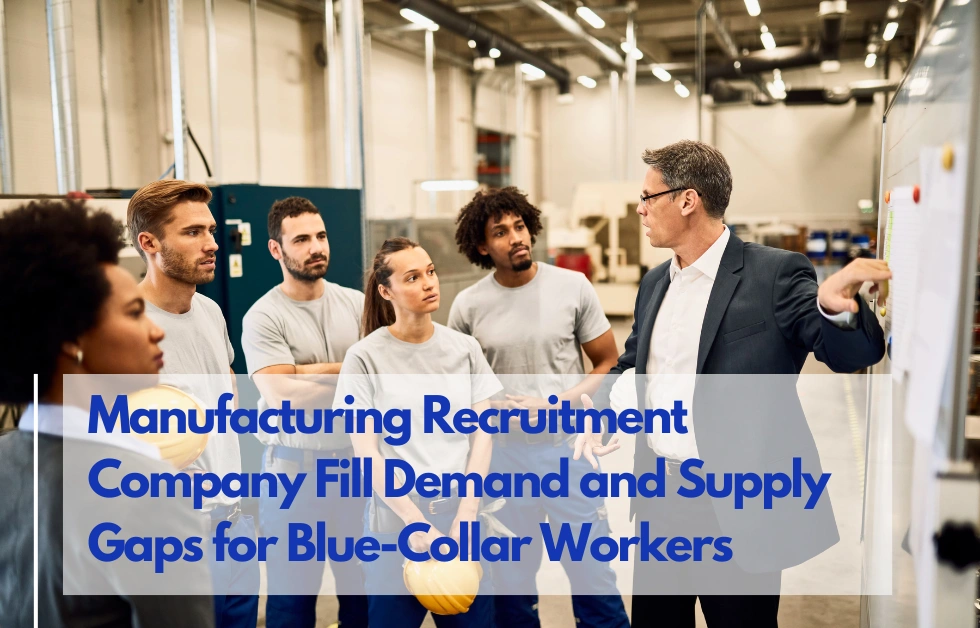
Manufacturing industries often require a skilled labour force for operations and different tasks. The demand for workers keeps fluctuating; thus, the constant necessity for skills arises in manufacturing industries. Serving the constant demand for workers becomes challenging for the manufacturing industries while looking after the operations. Staffing agencies have been around for decades, serving businesses and industries with skilled staff suitable for the role. Hence, recruitment agencies for manufacturing, which are also known for temporary manufacturing staffing, are preferred by many manufacturing industries to provide solutions for the constant recruitment needs. Manufacturing staffing agencies, with their expertise and experience, offer effective solutions to meet the constant recruitment needs. Here, you can explore and understand in detail how manufacturing recruitment companies fill demand and supply gaps for blue-collar workers.
Who Are Blue Collar Workers?
While we proceed further, if you aren’t aware of exactly what blue-collar jobs or workers are, here is what you should know. Blue-collar workers are the ones assigned to carry out manual labour work at factories or construction sites that usually require physical strength. The blue-collar jobs typically require minimum education, and the on-site training is provided to train workers. Blue-collar jobs include roles such as operator, welder, assembler, metal fabricator, technician, and many more.
Understanding The Challenges Faced by the Manufacturing Industry
Manufacturing is a vast field comprising various industries such as food processing, automobiles, aerospace, electronics, etc. Every industry has unique requirements for skilled blue-collar workers for different roles. For employers, it becomes challenging to find the right candidate for the roles in the industry. One of the common challenges manufacturing industrialists face is the skills gap. With the advancement in technology and automation, there is a rising demand for workers with specialized skills and technical knowledge. Many individuals lack the experience and skills required for a role that fails to meet the employee’s expectations. Similarly, manufacturing industries face various other challenges, such as seasonal variations, economic cycles, market trends, etc. These unpredictability and challenges make workforce planning difficult for companies.
Role of Manufacturing Recruitment Agency
Manufacturing staffing agencies address different challenges faced by manufacturing industries and provide tailored staffing solutions. These help employers find the right candidate and job seekers find suitable employment opportunities. The HR professionals understand the specific needs and source skilled workers from their extensive network for recruitment in the manufacturing industry.
Blue-collar workers are often found in remote areas; hence, HR outsourcing companies organize job fairs and job drives in different remote areas to reach potential candidates. Understanding their skills and experiences, manufacturing recruitment agencies help them to find suitable employment opportunities in various industries. For instance, various industries hire labourers to whom they offer low wages and no insurance or health benefits. However, blue-collar workers, by collaborating and cooperating with HR recruitment agencies, get suitable jobs, receive on-field training, get proper wages and insurance policies, and adhere to various labour laws and regulations, which benefits immensely.
-
Implementation of Strategic Recruitment Methods
Manufacturing recruitment agencies practice strategic recruitment methods to identify and attract top talent. The professionals at the manufacturing recruitment company utilize referrals, social media platforms, industry events, and online job boards to reach candidates. With a targeted approach, these agencies ensure that the job opportunities reach the right candidates.
-
Skills Assessment and Training
Manufacturing recruitment agencies conduct comprehensive skills assessments to examine candidates’ technical expertise and qualifications, which help to bridge the skill gap. The agencies also provide training programs to upskill candidates and enhance their employability. These help job seekers develop the skills required to succeed in the manufacturing industry.
-
Customized Staffing Solutions
When it comes to manufacturing company recruitment, the requirements differ based on different factors, such as industry sector, production processes, and project timelines. Manufacturing recruitment agencies customize the staffing solutions to meet the client’s specific requirements. Whether it’s hiring temporary staff for seasonal fluctuations or permanent employees for long-term staffing needs. The agencies provide flexible staffing solutions that align with the industry’s objective.
-
Streamlined Hiring Procedure
The HR professionals in the manufacturing industry streamline hiring procedures by handling various tasks. It includes tasks such as interviews, screening, background verifications, onboarding, and others. By handing over these recruitment activities to experienced recruiters, companies can save time and focus on their core business operations.
Having in-depth knowledge of the manufacturing sector, the recruitment agencies for manufacturing serve as trusted advisors to both employers and job seekers. They stay updated with the latest industry trends, regulatory changes and newly introduced technologies. These offer valuable insight and guidance to the manufacturing industries. The manufacturing recruitment agencies implement best practices to recruit and retain candidates, adapt to the changes, and provide expertise to help meet the recruitment needs of the clients.
Benefits of Choosing Manufacturing Staffing Agencies for Recruitment
Manufacturing staffing agencies offer flexibility to employers. When the demand for workers increases, the agency ensures that additional workers are provided instantly. As these workers are hired on a temporary basis, when the demand is low, the agencies reduce the number of workers. This flexibility is beneficial for industries and businesses that constantly face seasonal fluctuations.
Handing over the procedure of manufacturing company recruitment significantly saves the employer’s time. The recruitment agency looks after tasks such as recruitment, screening, and hiring of workers, among others. Moreover, staffing companies save time by providing additional workers on short notice.
Staffing agencies minimize the risk associated with hiring new employees. They are responsible for carrying out recruitment procedures and hiring workers. This helps to reduce the risk of hiring unqualified or unsuitable candidates for the role. For instance, if the worker selected by a manufacturing staffing agency doesn’t meet work expectations, the agency ensures that they are replaced.
-
Access To Skilled Workers
When employers are looking for skilled workers and are not eager to invest in training, staffing companies provide access to workers who have expertise and experience in specialized skills or have acquired certifications.
-
Reduces Administrative Responsibilities
Choosing a manufacturing recruitment agency reduces the administrative burden related to hiring and managing employees. They look after workers’ payments, benefits, etc. They also handle HR functions such as onboarding, training, and hiring, ultimately reducing the administrative responsibilities of the employer.
By implementing customized solutions, effective strategies, expertise, and experience, manufacturing recruitment agencies fill the demand and supply gap for blue-collar jobs. If you are looking for a reliable manufacturing requirement agency, choose Prompt Personnel. Providing HR outsourcing services for 25+ years, we have expertise and experience in services such as contract staffing, permanent staffing solutions, temporary staffing solutions, talent management, labour law advisory and compliance, and many more. Having a PAN India-level presence, we have successfully served 150+ clients. Understanding the requirements of different industries, our HR professionals provide tailored solutions to help onboard the right skills.
Being one of the best HR outsourcing companies, we have earned various awards over the years. The most recent one is a future-ready organization in the large-scale category and is certified as a great place to work in India.
Get in touch with us today to fulfil your manufacturing recruitment needs!