by Prompt Personnel | May 18, 2023 | Contract Staffing, Human Resources, Permanent Staffing , Temporary Staffing
India’s manufacturing sector has rapidly grown, driven by the automotive, electronics, and pharmaceutical industries and the government’s ‘Make in India’ initiative. However, infrastructure barriers, a shortage of skilled labour, and bureaucratic hurdles still exist. Manufacturing staffing is crucial to meet production goals, ensuring quality control, maintaining a safe work environment, fostering innovation, and boosting employee morale.
Manufacturing HR services play a critical role in workforce planning and recruitment, onboarding and training, employee relations and engagement, compensation and benefits, performance management, and compliance with labour laws and regulations in the manufacturing industry.
A Comprehensive Suite of Services at Prompt Personnel for Exceptional Performance in the Manufacturing Sector
Manufacturing staffing services are critical for the industry’s success. They provide flexibility, cost-effectiveness, access to top talent, industry expertise, risk mitigation, improved productivity, and time-saving benefits. By partnering with a reliable and experienced manufacturing staffing company, businesses can meet their workforce goals and stay competitive in today’s demanding landscape.
Prompt Personnel has been providing HR outsourcing for over 25 years. Our experience and deep understanding of manufacturing HR services give us insights into the industry’s specific staffing needs. With a PAN India presence and over 3000+ service locations, we are among the leading names offering manufacturing staffing solutions in India.
Prompt Personnel has a vast pool of pre-screened and verified candidates for the Manufacturing sector. We understand the specific skills required for each profile and offer Temporary Staffing services to our clients. For recruitment in the Manufacturing industry, we offer staffing solutions for product line supervisors, Manufacturing supervisors, product managers, warehouse executives, machine operators, transport managers, and more.

Our services for the Manufacturing sector include:
Staffing Solutions:We provide both temporary and long-term manufacturing staffing services. Our vast pool of pre-screened and verified candidates includes roles like product line supervisors, manufacturing supervisors, product managers, warehouse executives, machine operators, and transport managers. Our rigorous screening process ensures every candidate is skilled, experienced, and aligned with your business goals.
Payroll and Compliance: Prompt handles complete payroll management for temporary staff, including salary processing, tax compliance, and statutory obligations. This allows manufacturing businesses to stay focused on core operations while we manage backend processes.
Labour Law Compliance and Advisory Services: We ensure our clients remain compliant with all labour regulations applicable to manufacturing staffing. Our team of labour law consultants are well-versed in India’s temporary staffing laws and regulations.
Unlocking your workforce potential: Tailored staffing solutions for your business needs
Prompt Personnel provides flexible and agile staffing solutions that help businesses fill roles efficiently and with minimal time-to-hire. We offer customized manufacturing staffing solutions in India for companies needing short-term assistance or looking to hire permanent staff.
Contractual Staff or Temp to Hire: Perfect for companies needing workers for specific projects or seasonal peaks. This option also allows clients to convert temporary workers to permanent hires—ideal for companies evaluating talent before making long-term commitments.
Source-Train-Deploy Model: We handle everything—from sourcing candidates to designing training modules and deploying them to your production lines. Our model supports faster onboarding and increased workforce productivity.

Revamping Our Client Support: A Proactive and Personalized Approach
At Prompt Personnel, we understand that each manufacturing company operates differently. Our personalized approach means we listen, evaluate, and deliver staffing solutions based on the context and goals of your organization.
As a tech-driven manufacturing staffing company, our systems allow us to tap into talent quickly and manage large-scale staffing assignments efficiently. We remain committed to providing the best-fit candidates for roles ranging from general labor to niche technical expertise.
Our team specializes in manufacturing hr services, staying updated on evolving trends, skills, and technologies to deliver the right talent at the right time. We also provide ongoing support to ensure compliance and satisfaction on both ends.
In Conclusion, Prompt Personnel’s extensive expertise in the HR outsourcing domain makes us a trusted partner for manufacturing staffing. Whether you require temporary resources, long-term staff, or a strategic workforce partner, we are equipped to support your growth.
We combine advanced technology, regulatory knowledge, and a people-first approach to offer full-spectrum manufacturing staffing services—from payroll and compliance to sourcing and deployment. Our tailored offerings have helped businesses streamline HR operations and improve productivity across the manufacturing value chain.
Get in touch today to discover how our manufacturing staffing solutions in India can support your production goals with expert personnel at every level.
by Prompt Personnel | May 16, 2023 | Contract Staffing, Human Resources, Permanent Staffing , Temporary Staffing
In India, the retail industry has undergone a significant transformation in recent years, fueled by rapid economic growth, urbanization, and changing consumer behaviors. India’s retail market is one of the largest in the world which is expected to continue growing in the coming years.
Attracting, training, and retaining top talent is crucial for the growth of retail businesses. However, managing human resources in retail industry operations is becoming increasingly complex due to high attrition, demand fluctuation, and customer experience expectations. That’s where expert HR services for retail come into play.
Retail companies can develop effective recruitment and retention strategies by partnering with experienced retail staffing companies. These HR solutions help create a positive work environment, promote career growth, and implement clear HR policies in retail industry to stay ahead in a competitive landscape.
How Prompt Personnel – A Staffing Company can empower your workforce
We offer comprehensive HR outsourcing for retail companies, helping them manage their most important asset—their people. With deep industry expertise, we understand the unique staffing challenges and compliance requirements of the HR in retail sector.
Ensuring Compliance:
Compliance is key in the retail industry, where labour regulations frequently evolve. Our HR consultants conduct regular compliance audits, implement updated hr policies in retail industry, and provide employee training to minimize legal risks. We ensure our clients align with the latest legal and regulatory standards applicable to the human resource management in retail industry.
Training and Development for Employees:
A skilled workforce is essential for delivering excellent customer service and driving sales in the retail sector. Our HR consultants design and execute training modules, from on-the-job instruction to online courses and leadership programs. These hr solutions for consumer goods businesses help upskill employees and boost organizational productivity.
Effective Performance Management:
Our staffing services, retail companies can establish clear KPIs, offer timely feedback, and implement performance improvement plans. From performance reviews to coaching programs, we help retail businesses enhance team efficiency and support career development, strengthening human resources in retail industry functions.

Retail Industry-specific Profiles We Recruit
Prompt Personnel has a vast network of pre-screened and verified candidates ready to meet your hiring demands. We understand the precise skill sets required for various roles and provide tailored recruitment services, making us one of the most trusted retail staffing companies in India.
Store Managers:We understand that store managers play a crucial role in ensuring retail operations run smoothly. Store managers can effectively manage the store’s day-to-day operations.
Picker Packers: Efficient picking and packing are crucial for the success of any retail operation. We provide trained and experienced picker packers who can ensure that the products are picked and packed accurately and on time.
Cashiers:The cashier is the last point of contact for any customer, and their behavior can significantly impact the customer’s experience. Therefore, we provide friendly and efficient cashiers who can provide excellent customer service.
Sales Associates: Sales associates are critical in driving sales and ensuring customer satisfaction. We provide skilled and experienced sales associates who can effectively communicate with customers and provide them with the necessary information.
Officers: We also provide officers who can perform various tasks, such as stocktaking, inventory management, etc.

How Can Prompt Personnel Help?
Staffing Solutions: We provide both temporary and permanent staffing solutions tailored to the retail industry. Whether it’s seasonal demand or long-term expansion, our services are flexible and scalable. As a prominent retail staffing company, we maintain strict vetting procedures to ensure that each candidate is qualified, experienced, and suited to the client’s work environment.
Payroll and Compliance: Prompt Personnel simplifies payroll for your retail workforce. From salary processing and tax deductions to statutory contributions, we ensure accurate and timely payroll management. Our compliance team handles labour law formalities, aligning with hr policies in retail industry standards.
Labour Law Compliance and Advisory Services: We help retail businesses stay compliant with all labour-related mandates. Our team of labour law consultants ensures full alignment with the latest employment laws, safety norms, and documentation processes—supporting structured human resource management in retail industry environments.

by Prompt Personnel | May 7, 2023 | Human Resources
In today’s rapidly evolving job market, the role of artificial intelligence (AI) in various industries has become increasingly prominent. One such area is staffing and recruitment, where AI Based Staffing Company are revolutionizing the way organizations identify and hire talent. These companies leverage advanced algorithms, machine learning, and natural language processing to streamline and enhance the hiring process.
AI Based Staffing Companies employ cutting-edge technologies to automate and optimize various stages of the recruitment cycle. These platforms utilize AI algorithms to analyze vast amounts of data, including resumes, job descriptions, and candidate profiles.
By harnessing the power of AI, these companies aim to improve talent matching, accelerate sourcing and screening, enhance the candidate experience, and adapt to changing business needs.
Let’s look at the Pros of working with an AI-Based Staffing Company:
Improved Efficiency and Accuracy in Talent Acquisition
AI staffing companies excel in leveraging data analytics to match job requirements with candidate qualifications. By automating the talent matching process, these platforms significantly reduce the time and effort spent on manual screening. This efficiency translates into quicker hiring decisions and a higher likelihood of finding the right candidates for specific roles.
Faster Candidate Sourcing and Screening Process
Traditional recruitment methods often involve manually reviewing numerous resumes and applications, which can be time-consuming and prone to human errors. AI-based staffing companies streamline this process by utilizing machine learning algorithms to analyse candidate profiles, skills, and experience. This automated approach expedites candidate sourcing and screening, enabling recruiters to focus their efforts on engaging with top candidates.
Enhanced Candidate Experience and Engagement
AI-based staffing platforms enhance the overall candidate experience by providing personalized recommendations and timely updates throughout the recruitment journey. Through chatbots and automated communication systems, candidates receive prompt responses to their inquiries, ensuring a seamless and efficient process. This improved experience fosters positive engagement and enhances the employer brand, making the organization more attractive to top talent.
Scalability and Adaptability to Changing Business Needs
AI-based staffing companies offer scalability and adaptability, making them well-suited for organizations with varying hiring requirements. These platforms can handle large volumes of job applications and quickly adapt to fluctuations in demand. Whether a company is experiencing rapid growth or undergoing restructuring, AI staffing solutions can provide the necessary flexibility to meet evolving talent needs.
On the other hand, let us also look at the cons of working with AI-Based Staffing Companies:
Potential Bias and Lack of Human Touch in Decision-making
While AI algorithms can analyse vast amounts of data, there is a risk of introducing bias into the hiring process. Unconscious biases within the data or algorithm design can lead to unfair candidate selection or perpetuate existing disparities in representation. Additionally, some candidates may prefer a more personalized and human-centric approach. They can raise concerns about the lack of human interaction in the decision-making process.
Challenges in Assessing Soft Skills and Cultural Fit
AI algorithms primarily rely on quantifiable data to evaluate candidate suitability, which can pose challenges when assessing soft skills and cultural fit. Factors like teamwork, communication, and adaptability, are crucial for successful integration within a company’s culture. It is often difficult to quantify and assess solely through AI algorithms. Evaluating these intangible qualities typically requires human judgment and interaction. So that we making it a potential limitation of AI staffing companies.
Limited Contextual Understanding and Complex Hiring Scenarios
AI in Staffing helps in processing structured data and making decisions based on predefined patterns. However, they may struggle to understand nuanced contexts or handle complex hiring scenarios that require human judgment. Situations involving unique job requirements, unconventional career paths, or exceptional circumstances may require human intervention to ensure accurate and fair decision-making.
Initial Implementation Costs and Learning Curve
Integrating AI staffing solutions into an organization’s existing infrastructure may involve initial implementation costs. Organizations may need to invest in technology upgrades, staff training, and system customization. Moreover, adapting to new processes and learning to effectively utilize AI-driven tools may pose a learning curve for recruiters and HR professionals, potentially impacting productivity during the transitional phase.
Assessing the specific needs and requirements of your organization
Before partnering with an AI staffing company, it is crucial to evaluate your organization’s unique needs and requirements. Consider factors such as hiring volume, desired speed of recruitment, the importance of soft skills, and the cultural fit within your organization. Understanding these aspects will help determine whether an AI-based solution aligns with your hiring goals.
Weighing the pros and cons in relation to your hiring goals
To make an informed decision, it is important to weigh the pros and cons of working with an AI-based staffing company against your specific hiring goals. Consider the potential benefits of improved efficiency, scalability, and candidate experience, as well as the challenges related to potential biases, assessing soft skills, and complex hiring scenarios.
This evaluation will enable you to determine the extent to which AI aligns with your organizational values and objectives.
Understanding the importance of a balanced approach in leveraging AI
While AI-based staffing companies offer valuable tools and efficiencies, it is essential to maintain a balanced approach. Recognize the complementary nature of AI and human expertise, understanding that AI should augment, rather than replace, human judgment. Combining the insights provided by AI-driven algorithms with the intuition and experience of HR professionals can lead to optimal hiring outcomes.
How can organisations benefit from AI-Based Staffing companies?
- Selecting a reputable and trusted AI-based staffing company is critical to maximizing the benefits of this technology. Research different providers, review client testimonials, and assess their track record in delivering successful outcomes. Partnering with a company that aligns with your organization’s values and has a proven track record can enhance the likelihood of a successful collaboration.
- Effective communication between the organization and the AI-based staffing company is crucial for a successful partnership. Establish clear channels of communication to ensure smooth collaboration and provide timely feedback on the quality of candidate recommendations and the overall hiring process. This feedback loop helps the AI algorithms learn and improve over time, enhancing the accuracy and effectiveness of talent matching.
- To maximize the benefits of AI-based staffing, it is essential to combine the insights provided by AI algorithms with human expertise and intuition. Leverage the data-driven recommendations and automated processes offered by AI platforms. It is also involve HR professionals in decision-making, particularly in assessing soft skills, cultural fit, and complex scenarios. Human judgment and intuition can bring valuable insights to the hiring process that AI may not capture.
By carefully evaluating the specific needs and goals of your organization, weighing the pros and cons, and maintaining a balanced approach that combines AI with human expertise, you can make an informed decision. The success of working with an AI-based staffing company lies in selecting a reputable partner, establishing effective communication channels, and leveraging the strengths of both AI and human judgment.
AI has the potential to transform the staffing industry, and with thoughtful implementation and continuous improvement, organizations can harness its power to attract top talent and drive their business forward. Stay informed, adaptable, and open to the possibilities that AI brings, while always keeping your organization’s unique requirements at the forefront of decision-making.
Revolutionizing HR Outsourcing with Prompt: Modern Solutions for Talent Acquisition
Prompt Personnel is a leading provider of HR outsourcing services and a future-ready organisation in the industry. We are revolutionizing talent acquisition and staffing by use of new-age technology and a team of skilled recruiters. We offer modern solutions that align with the evolving needs of businesses. We recognize the transformative potential of technology in streamlining HR processes. By harnessing the power of new-age tools and platforms, we are able to offer efficient and effective solutions to our clients.

by Prompt Personnel | May 1, 2023 | Human Resources
In any organization, there may arise situations where an employee unexpectedly departs, leading to an urgent need for a replacement. However, the HR department may already be occupied with numerous pending tasks. It makes the service challenging to allocate immediate attention to the hiring process. In such crucial instances, engaging the services of an HR consultant in Bangalore can prove invaluable.
These firms specialize in assuming additional HR responsibilities, allowing businesses to operate seamlessly. By partnering with HR consultants, organizations can alleviate the burdens associated with urgent recruitment needs. In this way, they can ensure timely and effective solutions for their staffing requirements.
This article is a compilation of all you need to select the right HR consultants in Bangalore.
What is an HR consultancy?
HR consultancy refers to the practice of providing expert advice, guidance, and support to organizations in various aspects of human resources management. HR consultants in India are professionals who possess extensive knowledge and experience in the field of human resources. They offer their expertise to help businesses optimize their HR practices and processes.
Why do you need an HR consultancy?
Businesses may choose to engage an HR consultancy in Bangalore for several reasons. Here are some key reasons:
Expertise and Specialized Knowledge: HR consultants bring deep expertise and specialized knowledge in various areas of human resources management. They stay updated on industry trends, best practices, and changing regulations. Engaging HR consultancy services in Bangalore provides businesses access to this expertise, allowing them to benefit from the latest insights and strategies.
Cost-Effectiveness: For small and medium-sized businesses, maintaining an in-house HR department with a full team of HR professionals can be costly. Engaging HR consultancy services allows businesses to access the required HR expertise on an as-needed basis. It reduces overhead costs associated with hiring and maintaining a full-time HR staff.
Scalability and Flexibility: Businesses experience fluctuations in their HR needs, such as during periods of rapid growth, restructuring their workforce to meet seasonal demands or timelines for specific projects. HR agencies in Bangalore offer scalability and flexibility, providing businesses with the ability to scale up with temporary staffing solutions.
Focus on Core Business Functions: By outsourcing HR functions to a consultancy, businesses can free up their internal resources to focus on their core business functions. HR consultants in Bangalore take on the responsibility of managing HR processes. It allows business leaders and employees to concentrate on their primary areas of expertise and drive business growth.
Compliance and Risk Management: HR consultants possess in-depth knowledge of employment laws, regulations, and compliance requirements. They can assist businesses in ensuring compliance with legal obligations, minimizing legal risks, and implementing effective HR policies and procedures to mitigate potential liabilities. For this, many firms also seek labour law consultancy services as part of their HR strategy.
Overall, HR consultancies in Bangalore offer valuable support to businesses by providing expertise, cost-effectiveness, flexibility, objectivity, and specialized knowledge in various areas of HR management.
By engaging an HR jobs consultancy in Bangalore, businesses can enhance their HR practices, reduce HR-related risks, and focus on their core business objectives.
How can HR Consultancies provide assistance?
The scope of HR consultancy services may vary depending on the specific needs of the client organization. Some common areas where HR consultants provide assistance include:
Strategic HR Planning: HR consultants can help organizations develop and align their HR strategies with the overall business goals and objectives. They provide insights and recommendations on workforce planning, talent acquisition, succession planning, and organizational development.
Recruitment and Selection: HR consultants assist in designing effective recruitment strategies, creating job descriptions, conducting candidate assessments, and implementing selection processes to attract and hire the right talent for the organization.
Performance Management: HR consultants help organizations establish performance management systems and processes to monitor, evaluate, and enhance employee performance.
Employee Engagement and Retention: HR consultants work with organizations to develop strategies for enhancing employee engagement, job satisfaction, and retention.
Training and Development: HR outsourcing companies assist in identifying training and development needs within an organization and design customized learning programs. They may deliver training sessions themselves or collaborate with training providers to ensure employees receive the necessary skills and knowledge for their roles.
HR Policies and Procedures: HR consultants help organizations establish or update HR policies and procedures in compliance with labour laws and industry best practices. They provide guidance on areas such as employee handbooks, leave management, disciplinary procedures, and workplace compliance.
Change Management: HR consultants support organizations through periods of change, such as mergers, acquisitions, or restructuring. They help manage the people aspect of change by developing change management plans, and communication strategies.
Whether you’re partnering with HR consultants in India or a best HR consultancy in Bangalore, these functions are at the core of service delivery.
How to choose the right HR consultancy for your business?
Here are some key factors to consider when selecting an HR consultancy in Bangalore:
Expertise and Services: Choose a hr consultancy services in bangalore that matches your HR needs and industry. Determine if they have experience working with businesses similar to yours in terms of industry, size, and organizational structure. Look for a consultancy that can provide comprehensive HR solutions tailored to your unique requirements.
Reputation and Track Record: Research the consultancy’s reputation and track record in the industry. Review their client testimonials, case studies, and success stories to gauge the quality of their services and client satisfaction. Look into hr consultants in bangalore with strong client feedback and experience.
Credentials and Certifications: Look for HR consultancies with professionals who hold relevant certifications and qualifications in the field of human resources, such as certifications from reputable HR associations. These credentials demonstrate their commitment to staying updated with industry best practices and adhering to professional standards.
Client References: Request client references from the HR consultancy and reach out to their current or past clients. Engage in conversations to understand their experience working with the consultancy, the outcomes achieved, and the level of satisfaction with the services provided.
Approach and Compatibility:
Assess the consultancy’s approach to HR consulting and determine if it aligns with your organization’s values and culture. Consider whether they emphasize collaboration, communication, and understanding your unique needs.
Look for a consultancy that can work seamlessly with your internal team and adapt to your organization’s working style.
Customization and Flexibility: Evaluate the consultancy’s ability to customize its services according to your specific requirements. Consider their flexibility in accommodating changes or adjustments as your business evolves.
A good consultancy will be adaptable and responsive to your needs, tailoring their solutions to meet your HR objectives.
Cost and Value: Evaluate the consultancy’s pricing structure and determine if it aligns with your budget. Consider the value they provide in terms of the expertise, services, and support they offer.
While cost is an important factor, focus on the overall value and return on investment you can expect from engaging in their services.
Communication and Collaboration: Assess the consultancy’s communication style and their willingness to collaborate with your team. Effective communication and collaboration are crucial for a successful partnership.
Ensure that the consultancy maintains transparent and regular communication channels, keeping you informed about progress, updates, and any challenges.
By considering these factors and conducting thorough research and due diligence, you can choose best HR company that meets your business needs. Their Staffing Team can provide the right support and expertise for your HR requirements.
Prompt Personnel – One stop HR solution
If you are looking for an HR consultancy in Bangalore with all of the above qualities, your search ends here. Prompt Personnel Pvt. Ltd. is located on the Marathahalli-Sarjapur Road, Doddakannelli.
With a legacy of 25 years, Prompt Personnel is among the best HR consultants in Bangalore for your staffing solutions. With 8 branches across PAN India and 3000+ service locations, we can take care of your temporary and permanent staffing requirements.
You can trust our labour law consultancy and advisory services with a compliance capability in 28 states and 5 Union Territories.
Contact us for more information about staffing and compliance needs.
by Prompt Personnel | Jan 30, 2023 | Human Resources
One important role of a human resource leader in a business is to ensure that employees have a safe, healthy, fair, and equitable workplace. This entails monitoring an organisation’s adherence to regulations and labour law compliance in India in order to ensure HR compliance.
What does HR Compliance Refer to?
HR compliance refers to the adherence to laws and regulations related to human resources management, including issues such as equal employment opportunity, wage and hour laws, and workplace safety. This can include creating and implementing policies and procedures, providing training to employees, and ensuring that all HR activities are in line with federal and state laws. Employers must also ensure that their HR practices do not discriminate on the basis of race, sex, age, national origin, religion, or another protected status.
What is included in an HR budget?
Because human resources encompass so many areas, how can you be sure that an HR budget includes everything? Even small businesses can underestimate the costs of recruiting, hiring, training, and other measures to provide a positive employee experience. It is also an area that can quickly destabilise an organisation from both internal and external sources.
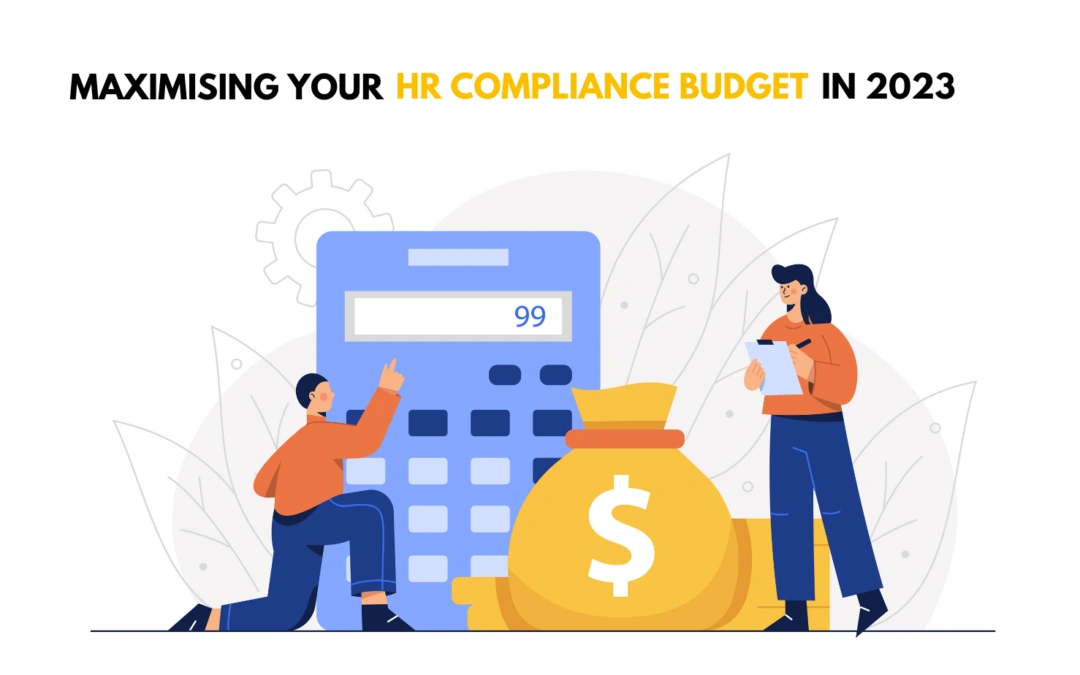
To ensure effective HR management throughout the year, labour law consultants advise all organisations to reevaluate their HR budgeting strategy in light of shifting priorities. An HR budget template can help you plan a reasonable budget for the coming year.
Importance of Maximising Your HR Compliance Budget
According to labour law advisors, maximising your HR compliance budget is important because it helps ensure that your organisation is adhering to relevant laws and regulations and protecting the rights of employees. This can help reduce the risk of legal action and fines and promote a positive work environment. A strong compliance program can also improve your HR operations’ overall efficiency and effectiveness. By allocating resources effectively, you can also help to identify and address potential compliance issues before they become serious problems.
Tips to Maximise Your HR Compliance Budget
There are several ways to maximise your HR compliance budget in 2023:
- Prioritise high-risk areas: Focus on areas that have the highest potential for legal or financial penalties, such as wage and hour laws, discrimination, and harassment.
- Leverage technology: Use software and tools to automate HR processes and ensure compliance.
- Train employees: Provide training and education to your employees on compliance issues and your company’s policies and procedures.
- Partner with experts: Work with legal and HR professionals to ensure compliance with all relevant laws and regulations.
- Keep up-to-date: Regularly review and update your compliance policies and procedures to keep up with any changes in the law.
- Audit: Regularly conduct compliance audits to identify and address any issues that could lead to non-compliance.
- Communicate: Communicate effectively with employees, managers and other stakeholders on compliance-related matters.
- Be Proactive: Be proactive in identifying and addressing potential compliance issues before they become major problems.
Overall, it’s important to be strategic and intentional in allocating your HR compliance budget to ensure that you effectively mitigate risk and protect your organisation.
Prompt Personnel: One of The Leading Labour Law Consultants in Mumbai
As labour law consultants, Prompt Personnel thinks it’s important to educate the clients about labour law regulations, familiarise them with compliance obligations and responsibilities, and help them protect themselves from related litigation. By utilising Prompt Personnel’s labour law consultancy and in-depth knowledge of the subject, extensive experience, and distinguished understanding of regulatory and statutory compliance, they ensure the safety of their clients and keep them safe from danger and potential losses.

by Prompt Personnel | Nov 23, 2022 | Human Resources
Labor laws or employment laws define the employer’s obligations regarding their employee’s security. The law serves as an outline to guard employees, be they on-premise, contract workers, or remote employees, against injustice or discrimination.
According to the best labour law consultancy, labour laws include objectives like:
- The physical and mental well-being of employees
- Equal pay and opportunities
- Safety and welfare of employees
- Workplace diversity and inclusion
As any labour law advisor would suggest, non-compliance to remote employee labour laws may lead to legal consequences for the employer.
Below are the categories of remote employee labour law employers must know about:
Minimum Wage Requirements
For non-exempt remote employees (those who work hourly), the employer must comply with the state minimum wage requirements law where the employee works from. However, if the centralized, state, and local minimum wage differ, the highest amount will apply to the employee.
Payroll Regulations
The best labour law consultants will advise, and guide you about payroll regulations; there are a few different aspects of it. Further, differences in payroll requirements exist between states and localities. Hence, employers must know what regulations apply to their remote employees.
- Tax: Filing taxes as an addition to central tax laws for remote employees
- Deductions: The mandatory payroll tax deductions, job-related expenses, and health insurance premiums.
- Payday: The employee payment frequency – weekly, bi-weekly, monthly, or semi-monthly.
- Paystubs: The information on paystubs, including paid sick leave accruals
- Delivery: The way employers deliver the paycheck.
Overtime Requirements
For non-exempt remote employees, employers must comply with the official overtime requirements. Per the guidelines, employers must pay at least the minimum wage for the first 48 hours of the working week. The organization must compensate employees twice times their regular rate for overtime, according to any labour law advisor. However, employers need not pay for unscheduled, unexpected hours they are unaware of.
Labor Laws for International Employees
Research regarding remote employee labour laws is necessary if you hire employees from other countries. Consider knowing the country’s labour laws with any reliable labour law consultancy where you employ remote employees. Here are a few key details that can help you choose countries wherefrom you want to hire your remote employees.
The labour laws in India are complex, but only a few apply to contract employees. However, employers are required to protect contract employees from discrimination.
In the case of taxes, both the employer and the employees are responsible.
Health and Safety Requirements
Employers must consider health and safety regulations for remote employees. They must create a safe and secure working environment. This means they must identify risks and hazards and take safety measures for employees. Employers may create a health and safety policy that includes training and allowing employees to report incidents and issues. Further, employers may also need to provide employees with protection equipment based on the type of work.
Workers’ Compensation
Even if your employees work remotely, they are eligible for workers’ compensation. The lack of employer control over employees’ working conditions is irrelevant here. This is because employers are responsible for providing employees with a safe working environment, regardless of where they work. If remote employees fall at home during teleworking, they may be eligible for workers’ compensation. It would depend on their sustained injuries (if any) during employment. Based on the location of the company and the remote employee, employers must assess the coverage and claims., according to the leading labour law consultants.
Complying with the labour laws for remote employees can be significantly tricky when the rules differ by state and country. Also, the remote work laws are subject to change over time. Entrepreneurs need to keep up with labour law compliance and changing regulations. Additionally, they must ensure that the business operates legally. With so many aspects to look after, it is easy for employers to get stressed. But with platforms like Multiplier, complying with remote employee labour laws can be more accessible. This is a good decision taken by the government to promote startups in India which will boost the startup sector, thus giving way to employment opportunities. For further support, be sure to contact a prominent labour law consultancy in India, Prompt Personnel.