by Prompt Personnel | Nov 11, 2024 | labour law advisory
Business growth goes hand in hand with an optimistic and constructive work culture. That aspect makes compliance with POSH highly relevant since it ensures that the environment remains employee-friendly and that there is no sexual harassment at the workplace. Being a strict governance and a legal necessity, it progresses far beyond compliance toward enabling productivity and teamwork and further toward overall business success. Organizations can create a culture of workplace respect by POSH training employees or by POSH compliance programs that feed growth. Business Impact of POSH Compliance
POSH compliance goes beyond being just a legal requirement. Instead, it is a strategic tool to enhance the dynamics at the workplace and pave the way for business success. A safe and respectful work environment enables employees to deliver their best, work harmoniously, and innovate without fear of harassment-related disturbances. The lack of harassment-related disturbances enhances morale and increases team efficiency and engagement.
Minimize Distractions for Better Productivity
A harassment-free workplace directly contributes to a productive environment. Harassment, discrimination, or any form of inappropriate behaviour creates stress, anxiety, and insecurity among employees, which in turn affects their concentration and performance. POSH compliance minimizes such problems by offering a safe and inclusive environment.
End Toxic Work Environments
A toxic environment will hamper productivity and reduce employee morale. The culture of accountability is well maintained through the compliant introduction of specific reporting mechanisms and expeditious resolution processes of POSH. If employees feel that their issues will be redressed, they can focus better, thus leading to better productivity.
Regular POSH training teaches employees about acceptable workplace behaviour, reporting violations, and their rights under the POSH Act. Awareness is an excellent tool to prevent harassment before it happens, thereby maintaining a positive atmosphere in which employees feel respected and empowered to perform at their best.
A respectful workplace leads to better mental well-being, which enhances employee satisfaction and retention. Suppose an organization is focused on safety, is POSH compliant, and has its employees trained. In that case, they will not leave and will be very active in contributing to achieving organizational goals.
Build Team Cohesion and Collaboration
A good, harassed working environment further provides sound team performance overall. For effective teamwork, trust, mutual respect, and communication are needed, among other attributes brought about by compliance with the POSH act.
Construct Respectful Relationships
The disrespect, harassment, and disrespect to individual members make the formation of teams and create mistrust among the individuals. Under such circumstances, compliance with the POSH, respect, and the organizational culture with positive interpersonal relations are inherent. In addition, courses on learning and development- inclusivity, respect
A safe and inclusive workplace will attract employees likely to generate ideas and contribute to teamwork. Organizations that promote effective harassment handling grow their businesses through innovation and creativity.
Ensuring a Sense of Unity
When employees see that an organization cares about safety, they become loyal to the organization. A shared responsibility to create a harassing-free workplace cultivates unity between them and energizes collective endeavors toward the objectives of the businesses.
POSH Training as Catalyst for Business Advancement
Organizations should invest in POSH online training and awareness programs to fully reap the benefits of POSH compliance. These programs provide flexibility, accessibility, and comprehensive education for employees and management alike. Know more about how inadequate training leads to Posh Compliance failures.
Convenience with Online Training
Online POSH training courses are highly accessible to employees without causing any disruption to their standard workflow. Some of these online courses may cover important details on harassment, reporting, and diversity, so all the employees would be learning and, in turn, respecting the policy within the workplace.
Know more about how inadequate training leads to Posh Compliance Failures
Certified Compliance
It means the organization, having gone through the accredited training program successfully and gaining the POSH certificate, proves its commitment towards the safety and respect of work environments. In that case, it strengthens the reputation among the employees, clients, and other stakeholders, in addition to organizational competitiveness.
Continuous Learning and Development
Regular employee training sessions should include learning and developing respect, inclusivity, and workplace ethics to make respect part of the organization’s culture.
Driving Growth Through Respectful Workplaces
Organizations that observe POSH compliance have several benefits, such as better employee productivity, teamwork, and innovation. These can lead to business growth by inspiring a motivated workforce who can achieve great results.
This investment in online training and awareness programs ensures a harassment-free environment that benefits the employees and helps the organization achieve its goals. Creating a respectful culture can foster long-term success while upholding a good brand image within the marketplace.
Start your journey to a respectful, productive workplace today by implementing comprehensive POSH employee training and ensuring compliance. A safe work environment showcases a business growth strategy that delivers results.
As a leading labour law advisory company, Prompt Personnel assists organizations in implementing POSH compliance by sensitizing employees about workplace harassment. Contact us today for more information.
by Prompt Personnel | Nov 7, 2024 | Learning & Development
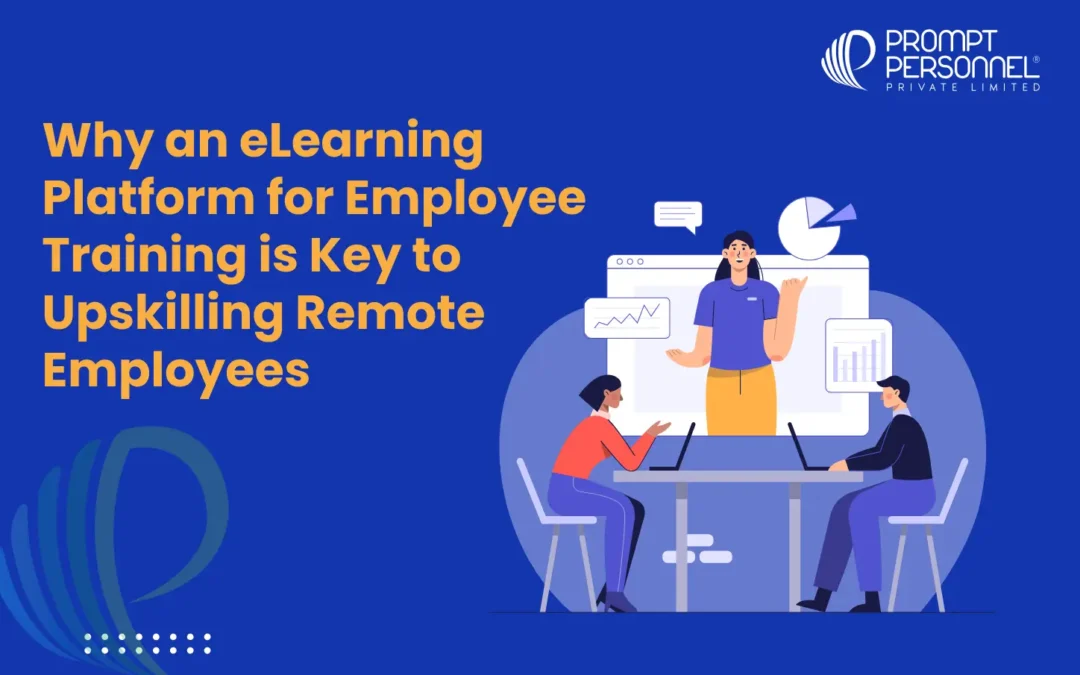
Remote and hybrid work have not become the new buzzwords but the actual future for most businesses worldwide. Organizations have seen productivity increases, better business outcomes, and happier workers, which has helped keep demand high for remote work. A 2021 Flex Jobs survey showed that 65% of employees wanted to remain fully remote post-pandemic. Companies must upskill their workforce to survive in this new world. Probably the most impactful of these is the employee upskilling platform that supports eLearning and online employee training programs, specifically for remote workers. Online training is essential to ensure business success among remote teams.
Accessibility and Consistency Everywhere
The biggest challenge of remote training is that the learning material must have access and consistency across all locations. In traditional training, in-person sessions or physical manuals are inaccessible to people working in different locations, creating gaps in learning and inconsistent knowledge transfer.
The issue is resolved through an e-learning for employees platform with centralized access to training content. With LMS tools, any employee can log in from anywhere and be directed to custom-built training material at once, ensuring that all employees receive similar high-quality instruction.
Additionally, eLearning removes the variation in physical classes where trainers may use different delivery modes or irrelevant content. A strong online employee training solution ensures that every distributed worker is aligned with organizational objectives and equipped with accurate and consistent data.
Cost-Effective Learning Solutions
Traditional training models are expensive in terms of travel, venue rentals, printed materials, and instructor fees. Costs can quickly spin out of control for organizations with distributed teams.
An eLearning platform reduces training expenses substantially. It allows for long-term training without the need for travel or physical infrastructure. Although the initial investment may be significant, long-term savings are enormous. Businesses save operational costs while still delivering quality training.
Additionally, web-based training enables workers to revisit modules multiple times without added cost, ensuring deeper learning and better ROI on L&D initiatives.
Flexibility for Diverse Workforce
Remote employees have flexibility in their work schedules, and training must reflect that. Telecommuting workers often have varied shifts and responsibilities that do not allow rigid training schedules.
An online employee training program facilitates self-paced learning, so employees can take courses whenever it suits them—during lunch breaks, evenings, or weekends—without disrupting their workflow.
This flexibility empowers remote workers and helps them stay in control of their learning journey.
Better Collaboration with Virtual Tools
Remote work may sometimes create a feeling of isolation since employees miss out on the collaborative environment of a physical office. However, modern eLearning platforms include virtual collaboration features that enhance teamwork.
These remote workforce training tools foster collaboration and keep remote teams connected, engaged, and motivated.
Insights for Better Decision-Making through Data
One of the common problems with remote training is the lack of visibility into learner progress. Managers often struggle to determine whether employees participate and benefit from the training programs.
That’s where remote employee training software becomes invaluable. With built-in analytics and reporting tools, it provides real-time insights into employee performance. Managers can track course completion rates, quiz scores, and engagement levels.
These data-driven insights help identify skill gaps and guide future training initiatives, ensuring that all employees stay on track with learning objectives. Know more about the benefits of outsourcing HR Services for remote team management.
Engagement through Gamification
Maintaining employee interest in training becomes difficult when learning happens in remote environments. An eLearning platform overcomes this issue by incorporating gamification—using game-like elements to make training interactive and engaging.
Badges, points, and leaderboards make training enjoyable and competitive. Employees become more willing to complete courses because it creates a sense of accomplishment and friendly rivalry.
Gamification increases engagement and retention, ensuring employees apply what they learn in their roles.
Employee Well-being
Mental health and well-being are essential for a productive workforce, especially in remote settings. Employees may feel overwhelmed or isolated, so organizations must support their emotional needs.
This may include training focused on mental health awareness, stress management, and work-life balance. Discussion boards and social learning features allow employees to share experiences and support one another, building a stronger sense of community.
By focusing on well-being through eLearning, organizations boost employee satisfaction and retention.
Readiness for Future Workforce Needs
As technology evolves, workplace skills must evolve as well. Organizations that invest in upskilling through employee upskilling platforms and other digital training systems prepare themselves for future challenges.
An eLearning platform makes it easy to introduce new modules—whether for updating software skills or improving communication and leadership abilities. Businesses can future-proof their workforce and maintain a competitive edge.
Conclusion
In this remote-first world, investing in an eLearning platform for employee training is not optional—it is mandatory. Online training enhances accessibility, reduces costs, strengthens collaboration, and supports the well-being of remote employees. With robust online employee training solutions, companies can empower their workforce and build a future-ready team.
Empower your employees and lift your organization with Prompt Personnel. Contact Us for Learning & Development solutions using India’s leading eLearning platform. It allows your workforce to benefit from self-paced training and professional development programs to fuel individual and organizational growth. Don’t wait—unlock the full potential of your remote teams today.
by Prompt Personnel | Nov 6, 2024 | Temporary Staffing
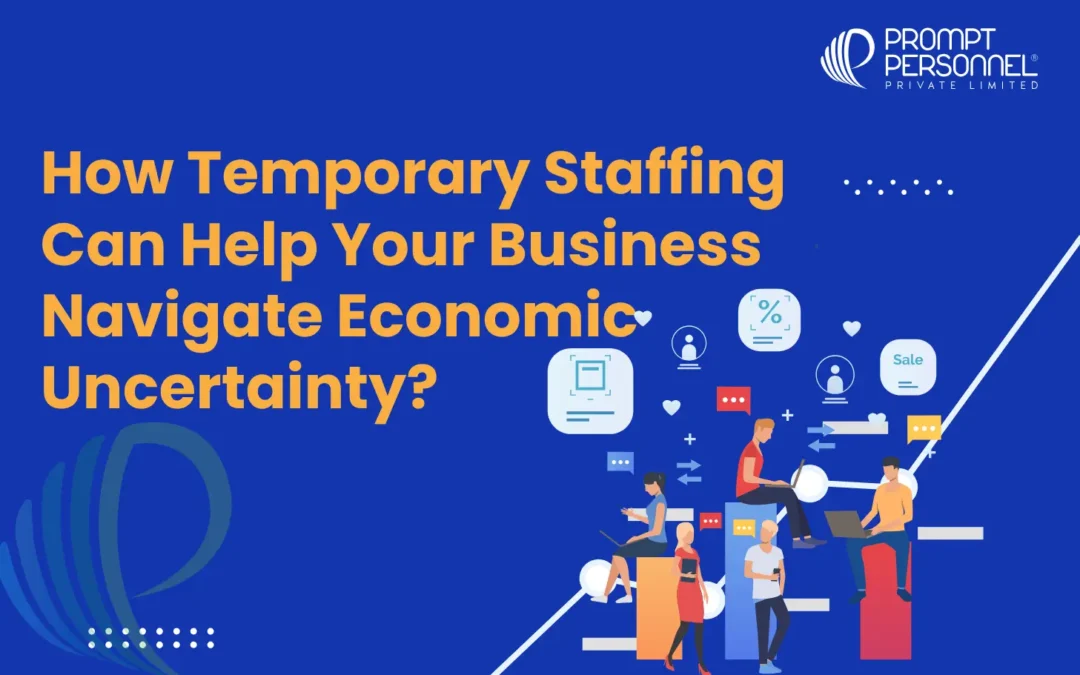
Economic uncertainty poses great challenges to businesses, ranging from fluctuating demand to tight budgets and unpredictable markets. In such times, controlling costs while maintaining operational efficiency becomes tough. Temporary staffing services help businesses to be strategic, flexible, and stay resilient, adapt quickly, and minimize risks.
Here’s a closer look at how temporary staffing solutions can benefit your business in economic uncertainty.
1. Scalable Workforce
Temporary staffing is one of the greatest benefits that allow businesses to scale their workforce based on current business needs. This can include hiring permanent employees because they can be used for projects that are short-term in nature, seasonal, or unexpectedly have more demand than usual.
For example, a retailer may employ temporary staff for the holiday period and reduce the workforce upon completion of that season. In this way, businesses meet demand without tying up with long-term employee commitments.
Why It’s Important: The American Staffing Association reports that some 90% of organizations rely on temporary staffing in order to rapidly respond to the dynamic marketplace. Flexibility is what keeps businesses running in such uncertain times.
2. Affordable Workforce Management
During uncertain economic climates, it is all-important to be cost-conscious. Permanent employees bring salaries, benefits, and the costs of training as part of hiring them and in the long term.
Temporary staff solutions will benefit businesses through saving costs associated with hiring professionals with necessary skills but without overhead costs, especially in tight budget management. Such a situation calls for maximizing resource usage when productivity has to be retained.
Fact to Know: A study from CareerBuilder showed that 25% of companies rely on temporary staffing to save costs and therefore, this is also a financial advantage in hard times.
3. Specialized Talent Access
Be it in tough times, companies still require specialized talent for critical projects, introduction of new technologies, or some compliance requirements. The best temp staffing companies in India maintain large databases of prescreened skilled professionals to be deployed for short assignments.
For instance, a digital transformation process for an IT company may require hiring temporary tech experts to manage the implementation process without having to make long-term employment contracts.
Pro Tip: Partner with a temporary staffing agency specializing in your industry to find talent that meets your unique needs.
4. Risk Mitigation Against Overstaffing
It has proven to be inefficient and overly expensive to hire too many permanent employees in times of uncertainty. Over-staffing can really ruin financial resources, especially with sudden decreases in demand. The flexibility of temporary staffing eliminates over-staffing. Workers are only taken when necessary, so a company maintains lean and efficient operation and avoids layoffs or downsizing during slow periods.
Why It Works: Companies can avoid risks and maintain agility by aligning workforce size with actual business demand. Companies do not have to spend time and money on unnecessary people.
5. Business Agility
Economic uncertainty frequently requires quick decision-making and swift action. Temporary staffing provides the agility needed for responding to sudden market changes.
For Instance, a manufacturing company can contract temporary employees during the peak demand period and slow down with an immediate turn down in the demand process. This quick adaptability allows the firm to catch the opportunities or overcome obstacles quickly.
Practical Understanding: By having a business relationship with temporary staffing agencies in India, it ensures access to dependable resources at your doorstep anytime; this maximizes your readiness to face any changes of circumstances.
6. Temporary-to-Permanent Positions for Long-Term Security
Temporary staffing is not a short-term solution. Many companies use a “temp-to-perm” model to assess the suitability of an employee before they are offered a permanent position. This allows organizations to test a worker’s skills, cultural fit, and job performance.
This strategy reduces permanent hire risks during uncertain times while promoting stability for the long term. It also allows high-performing temp workers to easily convert into permanent positions, cutting recruitment costs and enhancing retention.
Pro Tip: Transition a temporary employee who always delivers results to a permanent position to strengthen your team and ensure continuity.
Why Businesses Turn to Temporary Staffing Solutions
Temporary staffing is not a reactive measure; rather, it is a proactive strategy that brings a lot of benefits, including:
- Agility: Scaling up or down according to the immediate needs of business.
- Cost Savings: Reduction in labor costs because one avoids the overheads associated with permanent hires.
- Risk Reduction: Avoiding overstaffing and its attendant issues.
- Talent Access: Quick sourcing of specialized skills for specific projects.
- Operational Efficiency: Maintain productivity without long-term commitments.
Providing a diverse pool of talent helps temp staffing companies in streamlining the hiring process. This allows businesses to concentrate on their core activities.
Temporary Staffing: Real-World Examples
- E-commerce and Retail: Engage temporary staff when the season is for sales or some promotional event, resulting in increased order volumes.
- Healthcare: Use temporary professionals for high demands during public health crises or during mass vaccination drives.
- Technology: Engage onboard IT experts for digital transformation projects or cybersecurity implementations.
- Manufacturing: Use temp workers for production surges so that products are delivered in a timely manner without burdening permanent staff.
Conclusion
Economic uncertainty doesn’t have to stop your business’s growth or disrupt operations. By utilizing temporary staffing services, you can create a resilient, cost-effective, and flexible workforce that will help you navigate challenges.
At Prompt Personnel, we offer expert HR outsourcing solutions and a PAN-India network of consultants. Our professionals work efficiently to address clients’ temp staffing needs for timely and effective workforce management. For more information, get in touch with us today.

by Prompt Personnel | Oct 7, 2024 | Uncategorized
Retention of the top talent holds the same importance as recruitment. Especially when organizations are expanding, prioritizing employee satisfaction, with industry standard wages and benefits becomes important. Emerging as crucial components that determine the motivation across workforce, having fair employee compensation and benefits proves promising for both, employer and the employees.
Employee compensation encompasses not only salaries, bonuses, and incentives that employees receive for their contributions but also extends to a comprehensive benefits package. This package typically includes health insurance, retirement plans, paid time off, and wellness programs, all of which play a crucial role in enhancing the overall well-being of employees.
Employees are more likely to remain committed to an organization when they believe they are appropriately compensated, both financially and in terms of benefits. This promotes a sense of stability and recognition, resulting in higher job satisfaction. Inadequate compensation and a lack of perks, on the other hand, might lead to excessive turnover, reducing productivity and increasing recruitment expenses.
As one of the leading HR outsourcing companies in Mumbai, we have shared valuable insights on employee compensation and benefits. Here, you can explore the key challenges and effective strategies to enhance your compensation packages and create a more satisfied and loyal workforce, ensuring higher retention in your organization.
Components of Employee Compensation:
- Base Salary: The fixed payment an employee receives regularly, typically on a monthly or bi-weekly basis.
- Bonuses and Incentives: Additional financial rewards based on performance metrics, meeting goals, or completing projects.
- Stock Options and Equity: For certain companies, particularly startups, offering equity in the business can be a form of long-term compensation, encouraging employees to stay invested in the company’s growth.
- Non-Monetary Compensation: These include flexible work hours, recognition programs, training opportunities, and professional development, all of which enhance employee engagement.
Benefits Associated with Employee Compensation
Employee perks are an important aspect of remuneration packages, in addition to salaries. Comprehensive benefits packages can include:
- Health Insurance: One of the most valued benefits, providing employees with access to medical, dental, and vision care.
- Retirement Plans: Offering employees long-term financial security through 401(k) or pension plans.
- Paid Time Off (PTO): Vacation days, sick leave, and holidays ensure work-life balance and prevent burnout.
- Wellness Programs: Initiatives that promote physical and mental well-being, such as gym memberships, mental health support, or wellness workshops.
- Parental Leave: Providing paid time off for new parents fosters family-friendly work environments.
- Educational Assistance: Some companies invest in employees’ further education or skills development, increasing loyalty and retention.
Why Fair Compensation and Employee Benefits are Important for Retention?
Retaining employess is one of the most difficult challenges organizations experience today. When workers feel they are receiving competitive benefits and are fairly compensated for their efforts, they are more inclined to continue working with the same company in the long run. Here’s why:
A fair salary and comprehensive perks contribute to increased job satisfaction. Employees who believe they are well compensated are far more likely to feel valued by their company. This sense of value promotes a healthy work atmosphere and lowers discontent, which helps reduce employee turnover and promotes retention.
Employees who believe their salary reflects the value they add to the firm are more engaged and motivated. Engaged employees are more likely to become involved in the company’s mission, leading to higher efficiency, improved teamwork, and less absenteeism.
Work-life balance benefits, such as flexible working hours, paid time off, and wellness programs, have a major effect on retention. Employees who have the freedom to balance their professional and personal life are more likely to remain committed to their organization and avoid burnout.
Employee financial security is increased by providing benefits like life insurance, retirement programs, and health insurance. This assurance builds trust between the business and employee, which reduces the possibility that workers will look elsewhere for better financial terms.
- Reduced Turnover and Costs
A high rate of employee turnover can lead to increased costs, as companies must spend considerable amounts on hiring, training, and onboarding new staff. Offering attractive benefits and pay packages encourages employees to stay with a company longer, which ultimately saves money.
How To Ensure Fair Compensation and Benefits for Retaining Talent?
Businesses must regularly assess staff needs, industry developments, and financial performance in order to create the ideal compensation and benefits strategy. Here are some steps to enhance your compensation and benefits offering:
Stay competitive by benchmarking your compensation and benefits against industry standards. Ensure your offerings are in line with what competitors provide to avoid losing talent to other companies.
- Regularly Review and Adjust Salaries
Salary structures must be reviewed on a regular basis due to price inflation, rising living expenses, and changing job functions. Employee satisfaction and morale will increase if fair and timely compensation increases are provided.
- Tailor Benefits to Employee Needs
Not all employees value the same benefits. While some may prioritize flexible work schedules or educational support, others might focus more on health insurance. By meeting individual needs, a range of perks and a choice-making process can improve employee retention
- Communicate the Value of Benefits
Many employees don’t know what their benefits actually entail. Ensuring that staff members are aware of and understand the complete value of their pay requires regular communication and education on the perks to which they are entitled.
- Offer Career Development Opportunities
In addition to increasing an employee’s worth to the business, training programs, skill development courses, and mentorship opportunities also increase job satisfaction. Employee retention is higher in organizations when there is a clear path for development.
Bottom Line
Strong employee retention policy helps you to educate your workforce, enabling both, their growth and your company’s success. Outstanding retention reduces lost income potential, hiring costs, and knowledge loss. It increases employees’ contributions and lets you take full advantage of your talent resource.
Partnering with Prompt Personnel helps you ensure high-performing workforce that will propel your business to new heights. As one of the top HR consultants in Mumbai, we’ve spent over 25 years honing our expertise to deliver tailored HR solutions that help companies thrive. Our services extend across India, from Mumbai and Pune to Bengaluru, Delhi, Hyderabad, Chennai, and Kolkata, ensuring our clients benefit from our pan-India reach. We offer comprehensive HR services, including HR outsourcing, temporary and contract staffing, permanent staffing solutions, and expert labor law compliance.
Our experienced team works closely with clients to understand their unique requirements, providing strategic solutions that meet their evolving human resource needs. With a solid foundation built on expertise and trust, we’re proud to serve over 150 esteemed clients across various industries and sectors.
Let our HR experts help you build a robust workforce—reach out to discuss your organizational needs today!

by Prompt Personnel | Sep 25, 2024 | Uncategorized
Onboarding and retaining top talent are more influential than ever in today’s cutthroat employment environment. Compared to earlier days when the demand and supply of job vacancies and talent were relatively balanced, the ratio has witnessed a sharp surge in the need for the right talent for the right job.
Conventional recruiting techniques often fall short of meeting these requirements, as they rely heavily on resumes and interviews that can be misleading or incomplete. With advancements in modern hiring methods, many companies have adopted behavioral assessments to gain deeper insights into candidates beyond surface-level qualifications. These methods, including predictive hiring assessments, help align a candidate’s abilities, behaviors, and mindset with organizational expectations.
What Are Predictive Behavioral Assessment Methods and How Do They Help?
Predictive behavioral assessment methods are structured tools designed to evaluate candidates based on their psychological traits, behavioral tendencies, and cognitive abilities. Often used as a behavioral assessment for employment, these tools allow recruiters to gain a clearer understanding of candidates’ motivations, work styles, and behavioral patterns through data-driven analysis.
By using behavioral skills assessment for hiring, organizations can determine whether shortlisted candidates possess not only the right technical expertise but also the appropriate attitude, adaptability, and cultural alignment. Psychometric tests and predictive hiring assessments go beyond academic qualifications or past experience, helping employers forecast job performance, cultural fit, and long-term success.
Employing data-backed behavioral assessments for hiring enables companies to improve team dynamics, reduce attrition, and make more confident and informed hiring decisions.
As one of the tops HR outsourcing companies in India, we recognize the critical role that predictive behavioral assessments play in strengthening recruitment strategies and improving hiring outcomes.
Below is a detailed analysis of how these assessments can refine your recruitment process, supported by research and best practices for effective implementation.
Key Components of Predictive Behavioral Assessments
- Personality Traits:
These assessments evaluate key personality dimensions such as extroversion, agreeableness, conscientiousness, emotional stability, and openness to experience. Understanding a candidate’s personality through a behavioral assessment for employment helps predict how they will interact with colleagues, manage stress, and approach problem-solving.
- Cognitive Abilities:
Cognitive assessments measure problem-solving skills, logical reasoning, and decision-making abilities. These are particularly valuable components of predictive hiring assessments for roles requiring analytical thinking and judgment.
- Behavioral Tendencies:
Behavioral evaluations analyze how candidates are likely to act in real-world workplace situations. A behavioral skills assessment for hiring can uncover leadership styles, communication patterns, and teamwork capabilities, helping organizations assess cultural fitness and role compatibility.
- Motivational Drivers:
Some behavioral assessments for hiring also measure what motivates candidates—such as achievement, recognition, or autonomy—ensuring alignment with the role expectations and the organization’s reward structure.
Why Traditional Hiring Methods Fall Short
Before understanding the advantages of predictive behavioral assessments, it’s important to recognize the limitations of traditional hiring approaches:
- Resumes are Static: Resumes offer a one-dimensional view of a candidate’s work history and skills. They don’t provide insights into how well a candidate can adapt to new challenges or how they behave in team settings.
- Interviews are Subjective: Interviewers can sometimes be swayed by personal biases or the candidate’s performance during the interview, which may not reflect their real work behavior. A strong interviewee may not necessarily be the best long-term fit for the job.
- Lack of Long-Term Predictive Power: Even background checks and references rely on previous performance and conduct in specific circumstances, which might not translate to success in a new role or organization.
The Benefits of Predictive Behavioral Assessments
Predictive behavioral evaluations offer numerous advantages over traditional hiring approaches, making this technique an essential tool for firms looking to improve their efforts to hire.
- Better Candidate Shortlisting
One of the primary benefits of behavioral assessments for hiring is their ability to identify candidates whose traits and behaviors align closely with role-specific requirements. These assessments evaluate leadership potential, stress tolerance, collaboration, and adaptability, allowing recruiters to make more accurate matches.
When employees are placed in roles that suit their natural strengths, job satisfaction improves and retention rates increase—one of the key outcomes of effective predictive hiring assessments.
- Data-Driven Decision Making
Traditional hiring often relies on intuition, which can lead to biased or inconsistent decisions. Behavioral skills assessment for hiring introduces objectivity by leveraging data, helping organizations reduce bias and improve the quality of hiring decisions
How to Integrate Predictive Behavioral Assessments into Your Hiring Process
Integrating behavioral assessments for hiring into your recruitment workflow can be seamless when approached strategically.
- Identify the Key Traits for Each Role
The first step is to determine the main behavioral traits and competences needed for success in each function. For example, a sales position might require high levels of emotional intelligence and adaptability, whereas a technical post may necessitate excellent problem-solving abilities and attention to detail.
- Choose the Right Assessment Tools
There are various predictive behavioral assessment tools available, from personality tests like the Myers-Briggs Type Indicator (MBTI) and the DISC assessment to more specialized tools like Hogan Assessments or Predictive Index (PI). Choose a tool that aligns with your company’s needs and the specific requirements of the roles you’re hiring for.
- Incorporate Assessments Early in the Process
Predictive behavioral assessments are most useful when administered early in the employment process, ideally just before interviewing the candidate. This allows you to filter your candidate pool to people whose behaviors and attributes are compatible with the role, saving time and resources. Assessments can be included in the application process, with candidates completing them before their initial interview.
- Provide Training for HR and Managers
To maximize the value of predictive behavioral assessments, HR professionals and hiring managers must be trained on how to successfully comprehend and utilize the results. Understanding how to apply the insights produced by these tests can assist in ensuring that they are used consistently and fairly in all recruiting choices.
Bottom Line
In today’s highly competitive business environment, organizations must adopt proactive and intelligent hiring strategies to attract and retain top talent. Predictive hiring assessments and behavioral assessments for employment provide a strategic advantage by enabling data-driven hiring decisions, improving role fit, strengthening team dynamics, and boosting overall productivity.
If you are looking for top HR outsourcing companies in Mumbai to enhance your recruitment strategy with behavioral assessments for hiring, choose Prompt Personnel. As one of India’s premier HR outsourcing firms, we bring over 25 years of industry expertise and a strong Pan-India presence across Mumbai, Pune, Bengaluru, Hyderabad, Delhi, Chennai, and Kolkata.
Our comprehensive services include HR outsourcing, temporary and permanent staffing, contract staffing, labour law compliance, and talent management. Backed by award-winning performance and certifications—including being recognized as a Great Place to Work in India for 2024–25—Prompt Personnel is your trusted partner for future-ready hiring solutions.
Contact Prompt Personnel today to enhance the employee experience at your organization!